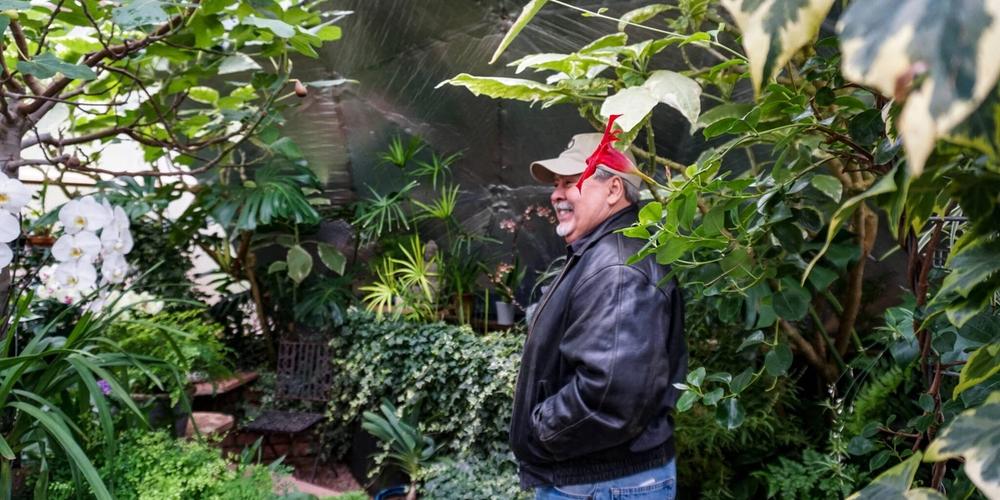
Vertical Gardening and Forest Garden Design for a Thriving Food Forest

When you first walk into a new Growing Dome, most people instinctively think horizontally. How should the raised garden beds be designed? How wide should the paths be? How can every square foot be used efficiently?
That way of thinking makes sense. Most of us learned to garden outdoors or in traditional greenhouses, where maximizing space usually means dividing beds into grids, counting plants per square foot, and focusing almost entirely on what happens at soil level. Those habits are hard to break, but a Growing Dome isn’t designed to work that way.
A dome greenhouse is built to grow upward as much as outward. Once you look up, the way you think about gardening begins to shift. The height of the dome isn’t just an architectural feature; it’s usable growing space. And that vertical space is what makes vertical gardening, forest gardening, and even full food forests possible inside a Growing Dome.
Why Vertical Height Is the Dome’s Biggest Advantage
Traditional greenhouses tend to emphasize wall space and long, linear beds. A Growing Dome, by contrast, creates a tall, open central growing zone that changes how plants interact with light, air, and one another. Even the smallest 15’ Growing Dome rises more than nine feet at the center, while the largest 42’ diameter Growing Dome reaches well over sixteen feet.

That vertical space allows plants to occupy space in layers rather than competing for the same strip of soil. Instead of crowding everything at ground level, plants can spread upward and outward, each finding its own place. This ability to grow in layers is the foundation of both vertical gardening and forest gardening, and it’s what allows a Growing Dome to function more like a living ecosystem than a traditional greenhouse garden.
Vertical Gardening in a Growing Dome: Growing Up Instead of Out
Vertical gardening is often the first shift people make when they begin to understand what a Growing Dome can do. A vertical garden uses trellises, strings, cages, or supports to guide plants upward into space that would otherwise go unused.
Inside a Growing Dome, this approach immediately changes both productivity and plant health. Crops like tomatoes, cucumbers, pole beans, peas, and grapes naturally want to climb. When they’re encouraged to grow upward, airflow improves around leaves and stems, reducing disease pressure and making plants easier to maintain. Harvesting becomes simpler, beds feel less crowded, and soil‑level space opens up for additional plants.

Just as importantly, vertical plants begin to influence the environment inside the dome. As they grow taller, they create shade, redirect airflow, and subtly alter temperature and humidity. Vertical gardening isn’t only about saving space. It actively shapes the climate of the dome.
Using Vines and Trellises to Create Living Shade

As vertical crops mature, their role expands beyond food production. Dense foliage filters sunlight, especially on the south and west sides of the dome where light and heat are strongest. Over time, vines and trellised plants soften harsh midday sun and protect more delicate crops growing below.
This living shade reduces heat stress, moderates temperature swings, and creates gentler growing conditions beneath the canopy of leaves. Instead of relying solely on shade cloth or external controls, the plants themselves become part of the dome’s climate‑management system. In a well‑designed vertical garden, growth above improves conditions below.
Hanging Baskets: A Subtle but Powerful Upper Layer
Hanging baskets introduce another layer of productivity without competing for bed space. Suspended above walkways or along the dome’s perimeter, these plants sit in warmer, drier air where heat naturally rises.

These conditions are well-suited to strawberries, herbs, flowers, and trailing plants that appreciate good air circulation and easy access for harvesting. When used thoughtfully, hanging baskets add visual interest, attract pollinators, and increase overall yield without casting heavy shade on soil‑level crops. Just remember to water them regularly, as they will dry out quicker than your raised garden beds.
What Forest Gardening Means in a Growing Dome
A forest garden is a growing system inspired by the structure of natural forests. Instead of planting everything at the same height, plants are arranged in layers, with taller plants forming an upper canopy and smaller plants thriving in the filtered light below. Forest gardening, at its core, isn’t about specific plants. It’s about how plants occupy space over time.
Forests are productive not because they’re orderly, but because they use space efficiently. Sunlight is captured at multiple levels, roots occupy different soil depths, and plants support one another rather than competing directly. Forest gardening applies these same principles intentionally.
Inside a Growing Dome, forest gardening becomes especially practical. The dome already moderates wind and eliminates frost and heavy rain, allowing gardeners to focus on plant relationships, placement, and long‑term growth rather than constant protection from the elements.
The Layers of a Forest Garden in a Growing Dome
Not every Growing Dome, especially smaller sizes, will include every layer. Forest gardening is flexible by design. Rather than thinking of a forest garden as a static list of plants, it helps to see it as a living structure made up of layers. Each layer occupies a different vertical area, allowing plants to share space, light, and resources instead of competing directly at ground level.
Canopy Layer: Long-Term Anchors

The canopy layer forms the upper structure of a forest garden. In a Growing Dome, this layer is typically made up of fruit trees selected for their manageable size and long lifespan. We favor figs and other deciduous trees because they provide generous summer shade while allowing winter light to pass through once leaves drop.
These canopy plants shape airflow, influence temperature, and determine how light moves through the dome over time. They are not seasonal crops, but long-term anchors that the rest of the system grows around.
Vertical and Sub-Canopy Layer: Climbers and Transitional Crops

Below and around the canopy is the vertical layer, where vining and trellised crops thrive. Tomatoes, peas, cucumbers, beans, and grapes naturally grow upward and are well-suited to this role. This layer makes use of unused airspace while improving airflow and access to light.
Vertical crops are also highly adaptable across seasons, often acting as transition plants that bridge summer and winter growth.

Shrub and Herbaceous Layers: Mid-Level Productivity
Between the canopy plants and the soil surface are the shrub and herbaceous layers. Berry bushes, rosemary, lavender, brassicas, leafy greens, and other culinary plants occupy this zone. These crops benefit from partial shade and protected conditions created by the layers above.
In a Growing Dome, this layer becomes especially important during cooler months, when plants like kale, broccoli, cabbage, cauliflower, chard, and sorrel continue growing steadily under filtered light.
Ground Cover Layer: Living Mulch That Feeds You

Ground covers are one of the most valuable and overlooked layers in a food forest. These low-growing plants protect soil, reduce evaporation, suppress weeds, and often produce food at the same time.
For this layer, try thinking outside of the realm of traditional cover crops like clover and ryegrass. Edible ground covers such as strawberries, alpine strawberries, thyme, oregano, and mâche (corn salad) fill gaps beneath larger plants. They keep soil covered year-round and support the overall health of the system.

Root Layer: Supporting Harvests
Below the surface, root crops like carrots, beets, onions, garlic, and radishes occupy a less visible layer. These plants add yield without disrupting the perennial structure above them when planted and harvested thoughtfully.
Seasonal Layering: Why There Is No Off-Season in a Forest Garden
Forest gardens are not designed to be cleared out and replanted every season. Instead, they evolve continuously as plants shift roles over time.
In a Growing Dome, this seasonal overlap is especially visible in fall. As tomatoes reach maturity, most fruit is produced high on the plant. Lower branches can be pruned, allowing light and space for cool-season crops like cauliflower, broccoli, kale, and cabbage to be planted underneath. By the time tomatoes are ready to be cut back or removed entirely, the brassicas below are already well established and growing.

Tomatoes and peppers with lower branches pruned so that small cabbage starts, and beets below can establish before winter
This same pattern continues into winter. Deciduous canopy trees allow more light to reach lower layers, while cold-tolerant vines like peas, along with greens, herbs, and ground covers, continue producing at a slower, steadier pace. Soil remains covered, moisture is retained, and productivity never fully pauses.
Rather than an off-season, a forest garden shifts layers gradually. One crop hands space and light to the next, keeping the system productive, resilient, and alive year-round.
What Is a Food Forest?
A food forest is a forest garden designed primarily around edible plants. While forest gardens can include ornamental or purely native species, food forests emphasize long‑term food production through perennials, fruiting trees, and self‑renewing plant varieties.
In a Growing Dome, a food forest might include fruit trees forming a light canopy, vines producing seasonal harvests, perennial herbs continuing year after year, and ground covers that both protect soil and produce food. Because the dome extends the growing season and moderates temperature extremes, food forests inside a Growing Dome often establish faster and produce more reliably than outdoor systems.

Vertical Gardening, Forest Gardens, and Food Forests: How They Connect
These terms are sometimes used interchangeably, but they describe different aspects of the same idea.
- Vertical gardening is a technique that trains plants to grow upward.
- Forest gardening is a system that layers plants to mimic natural ecosystems.
- Food forests are edible forest gardens designed for long‑term harvests.
In a Growing Dome, vertical gardening often becomes the entry point. As vines mature, shade patterns shift, and perennials settle into place, the garden naturally evolves into a layered forest garden and, eventually, a productive food forest.
Understanding Microclimates Inside the Dome
Every Growing Dome contains multiple microclimates, shaped by sun angle, airflow, and the dome’s curved structure. Learning to recognize these zones is key to successful vertical gardening and forest gardening.

Morning light on the east side tends to be gentle and cool, making it ideal for greens and herbs. The south side receives the strongest light and supports fruiting crops and vigorous vertical growth. Heat builds in the afternoon on the west side, which makes it a natural place for canopy plants and vines that can filter sunlight. The center of the dome is typically the most stable area, well-suited for long‑term plantings that prefer consistent conditions.
Forest gardening allows these zones to work together, rather than forcing the entire dome into a single growing pattern.
Plant‑Created Shade and Passive Cooling
One of the long‑term advantages of forest gardening is passive cooling. Large leaves absorb and diffuse sunlight, while transpiration releases moisture into the air. Together, these processes help moderate temperatures inside the dome.
As living shade becomes established, summer heat buildup decreases, soil stays moist longer, and growing conditions become more forgiving. Instead of constantly reacting to heat, the system begins to regulate itself.

Why Planning Early Makes a Difference
Forest gardens are built over time. Trees grow slowly, vines mature over multiple seasons, and shade patterns shift as plants reach their full size. Thinking about forest gardening early, before beds are finalized, helps prevent overcrowding, unintentional shading, and difficult replanting later on. This is why we typically recommend starting with the idea of vertical gardening first. Even starting with a single vertical crop or one long‑term canopy plant can shape the future of the dome in positive ways.
How to Begin Without Overwhelm
You don’t need to create a full food forest all at once. A simple, gradual approach works best. Start with one vertical crop, add a single perennial or tree, and spend a season observing how light and heat move through the dome. From there, expand slowly, layer by layer, allowing the system to guide your decisions.
Forest gardening is not a single planting event. It’s an ongoing relationship between plants, space, and time.
From Square Feet to Living Layers
Square‑foot gardening teaches us to maximize space on the ground. A Growing Dome invites us to think differently. By combining vertical gardening with forest gardening principles, we move from growing in two dimensions to growing in three. The result is a dome that feels balanced, productive, and increasingly self‑regulating.
A Growing Dome isn’t just a greenhouse. It’s a living food forest designed in layers, growing upward and outward, and becoming more productive with every season.

Seasonal Growing Tips & Greenhouse Advice
Monthly stories from our greenhouses, Growing Dome spotlights, and other gardening content


Share This

I graduated from Fort Lewis College in 2018 with a BA in Environmental Studies. I began working for Growing Spaces in August of 2020 and have had the pleasure of working in many departments. I enjoy being a part of this amazing team that helps others achieve their dream gardens! In my spare time, I enjoy working in the 15’ Growing Dome that my husband and I share.
View full bioDownloads
Featured Categories
Seasonal Growing Tips & Greenhouse Advice
Monthly stories from our greenhouses, Growing Dome spotlights, and other gardening content
Featured Stories


Growing Dome Photo Contest 2026


How the Growzebo™ Came to Life

Featured Products


Sign up for The Happy Grower Newsletter
Once a month: stories from our gardens, Growing Dome spotlights, and what's in season in Pagosa Springs.