Best Greenhouse for Wind

If you garden in a windy location, choosing the right greenhouse is critical. Strong gusts can twist frames, rip panels loose, and turn poorly designed structures into ongoing repair projects. The best greenhouse for wind is one that allows wind to flow easily around it. That’s exactly why the Growing Dome® greenhouse has become a trusted choice for growers in windy plains, coastal regions, mountain valleys, and storm-prone areas.
In this guide, we’ll break down what makes the best greenhouse for wind, compare common greenhouse designs, and explain why the Growing Dome’s geodesic structure consistently outperforms traditional greenhouses in high-wind conditions.

What Makes a Greenhouse Wind-Resistant?
Wind resistance isn’t about brute strength alone. It’s the result of several design factors working together:
- Shape – how wind moves around the structure
- Structural geometry – how force is distributed through the frame
- Materials – how panels and framing respond to pressure
- Anchoring system – how the greenhouse transfers load into the ground
Most greenhouse failures in wind happen because one or more of these elements is overlooked. Failures happen not because of rare, extreme storms, but because lightweight kits, thin plastic coverings, or inadequate anchoring are used in the wrong conditions. In exposed regions, underestimating everyday wind speeds is often what leads to long-term structural fatigue or sudden failure.
Wind pressure increases with the square of wind speed. This means an 80 mph gust doesn’t apply twice the force of a 40 mph gust; it applies four times the force. Gusts above 80 mph frequently occur during storms and frontal systems. These are exactly the conditions where greenhouse shape and anchoring make the biggest difference.
Why Traditional Greenhouses Struggle in Wind

Many standard greenhouses are designed with flat walls and peaked roofs. While this shape is familiar, it creates problems in windy environments. Flat surfaces act like sails. When wind hits a vertical wall, pressure builds instead of dispersing. According to storm-damage research from the University of Massachusetts Extension, windward pressure and leeward suction often combine to cause structural failure in conventional greenhouse designs. Even when reinforced, rectangular greenhouses concentrate wind force on corners, seams, and roof edges, which are the weakest points in the structure.
Hoop houses and tunnel greenhouses often struggle in high winds because their flexible frames and fabric coverings can act like sails as well. Gothic arch and A-frame greenhouses handle wind better than flat-roof designs, but their vertical sidewalls still concentrate pressure during strong gusts. Geodesic domes differ because they eliminate large flat surfaces altogether.
Understanding Windward and Leeward Forces
When wind hits a structure, it creates two different types of pressure at the same time. On the windward side (the side facing the wind), air slows down and stacks up, creating positive pressure that pushes directly against walls and panels. This is the force most people imagine when they think about wind damage.
At the same time, the wind speeds up as it moves around the structure. On the leeward side, this faster-moving air creates a low-pressure zone, or suction, that pulls outward on walls, roofs, and panels. In rectangular greenhouses, these opposing forces can work together, pushing on one side while pulling on the other, placing enormous stress on corners, fasteners, and roof edges. In plain terms, the structure is being squeezed and pried apart at the same time, which is why failures often occur suddenly once wind speeds pass a certain threshold.

A dome-shaped structure reduces this push-pull effect because wind flows continuously around its curved surface instead of striking a large flat wall. Without broad vertical faces, positive pressure buildup on the windward side is minimized and leeward suction is softened, resulting in more evenly distributed forces across the entire shell rather than concentrated stress at corners or roof edges.
The Growing Dome Advantage in High Winds
The Growing Dome greenhouse is built using a geodesic dome design, one of the strongest structural forms known in engineering and nature. Buckminster Fuller popularized geodesic domes for their ability to enclose the most space with the least material while maximizing strength, an approach still widely studied in architectural engineering. You can learn more about how this geometry works in our breakdown of the geodesic greenhouse shape.
1. Aerodynamic Shape That Deflects Wind
Instead of fighting the wind, the dome shape allows air to flow smoothly around the structure. There are no large flat walls for wind to push against. Curved surfaces experience lower drag coefficients than flat planes. As wind speed increases, pressure is naturally deflected over and around the dome, reducing stress on any single point.
2. Geodesic Geometry Distributes Force Evenly
The Growing Dome’s frame is made of interconnected triangles. This geometry spreads wind loads across the entire structure and down into the foundation. Instead of stress concentrating at corners or rooflines, force is shared across dozens of struts. Triangular geometry converts lateral wind forces into compressive loads that move safely through the structure and into the ground due to the rigid nature of the triangular shape.
3. Engineered Materials Built for Harsh Weather
Growing Domes are covered with high-quality polycarbonate glazing, selected for its strength, impact resistance, and long-term weather performance. Multiwall polycarbonate is widely used in commercial and architectural applications because it offers exceptional impact strength compared to glass or thin plastic films, along with high light transmission and built-in insulation from its internal air channels. Unlike lightweight coverings that can flap or fatigue in windy conditions, rigid multiwall panels maintain structural integrity under sustained wind pressure, while also resisting hail damage and extreme temperature swings over time.
Beyond glazing, the Growing Dome uses structural-grade #1 Douglas fir struts, a species known for being strong and stiff for its weight. Douglas fir has some of the highest strength ratings of any Western softwood in bending, tension, shear, and compression, which is why it is widely used in structural framing. In a geodesic structure where wind forces are distributed across many interconnected struts, these properties help the struts perform reliably under compression and repeated wind gusts.
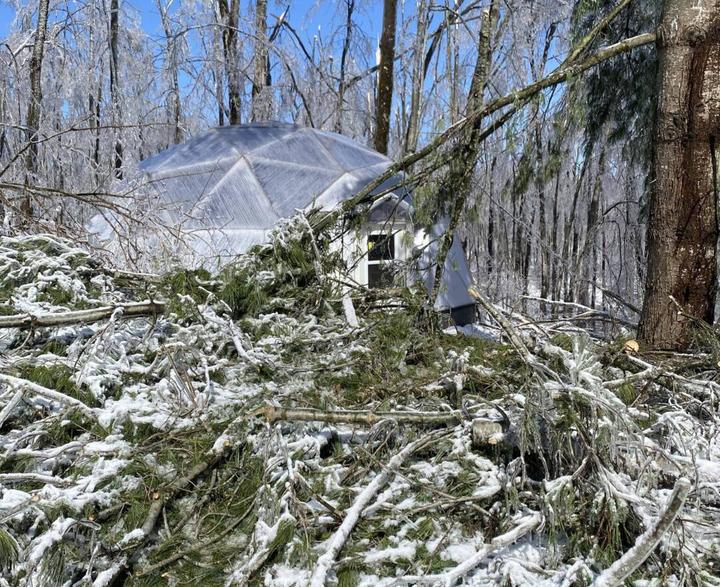
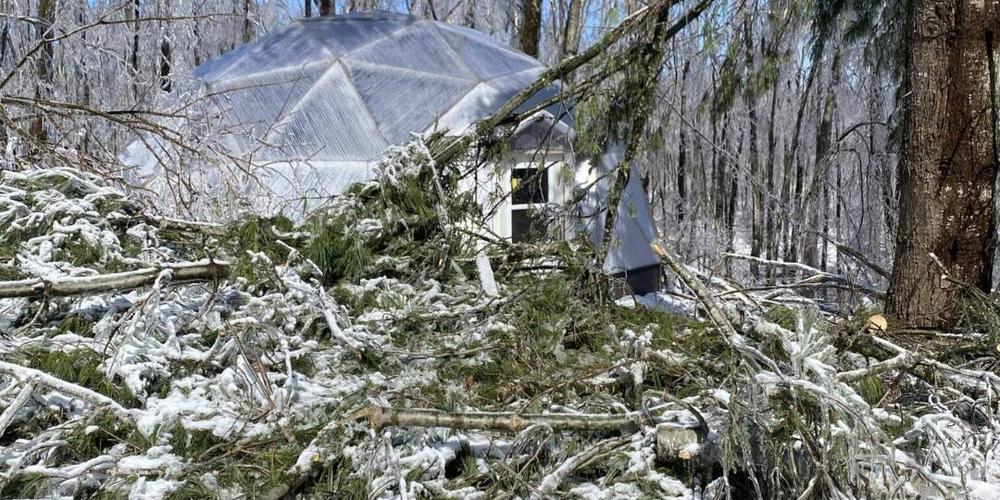
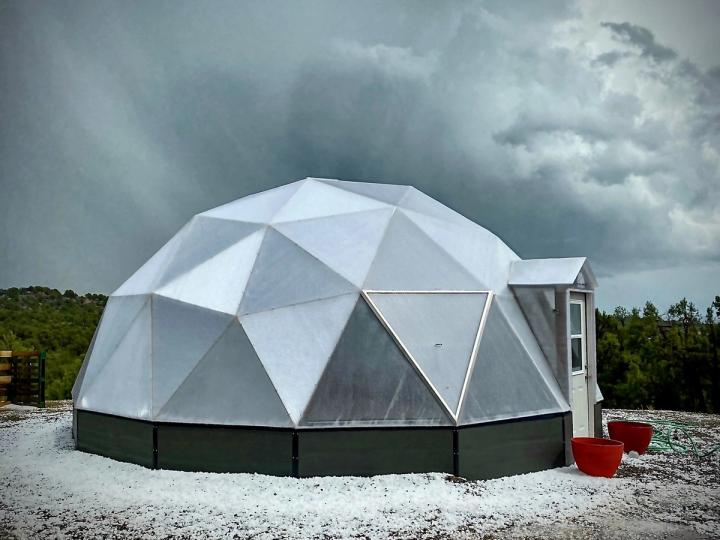
26′ Growing Dome after a wind and ice storm Northern Michigan 2025
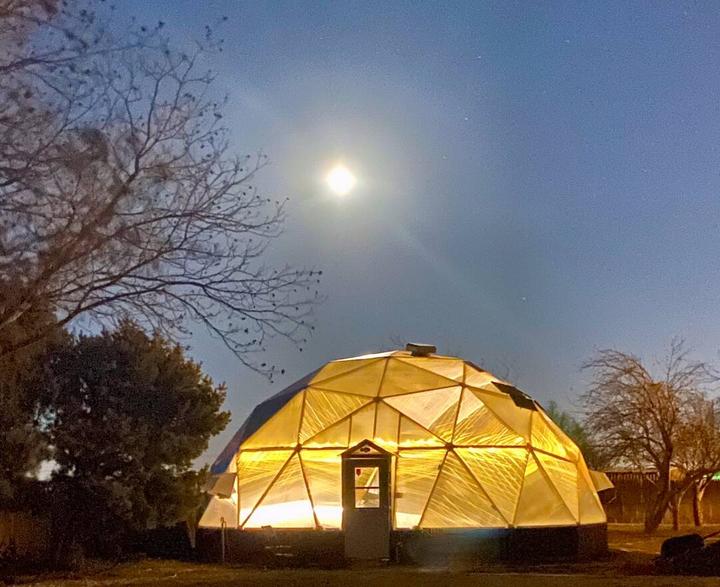
33' Growing Dome in windy West Texas
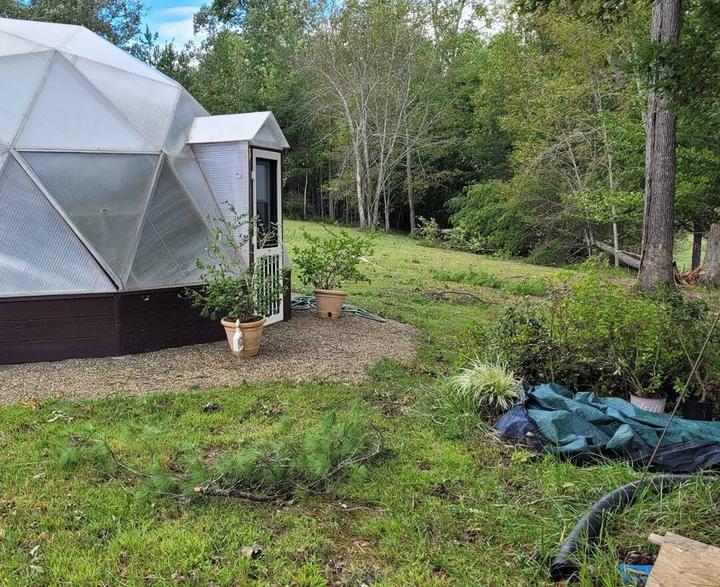
26′ Growing Dome after surviving Hurricane Helene in North Carolina 2024
4. Secure Anchoring and Foundation Options
Wind resistance doesn’t stop at the walls. Even the strongest structure can fail if it isn’t properly anchored. Most Growing Domes are anchored using rebar driven into compacted gravel, creating a strong connection between the greenhouse and the ground. As outlined in our greenhouse foundation guide, this method allows the structure to flex slightly with environmental forces while remaining securely rooted.
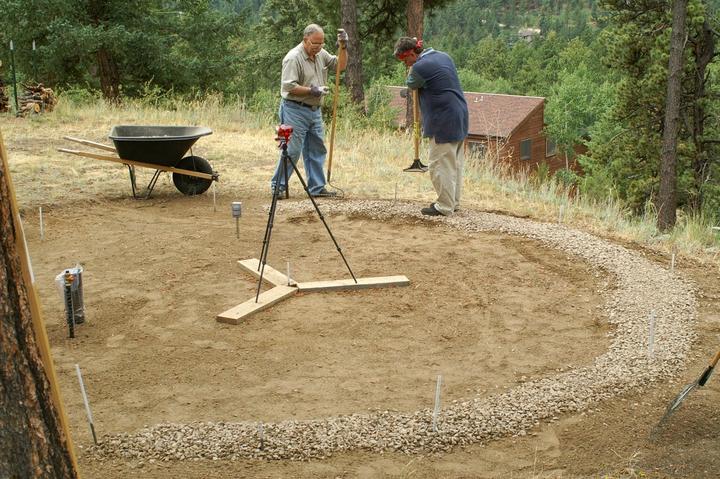
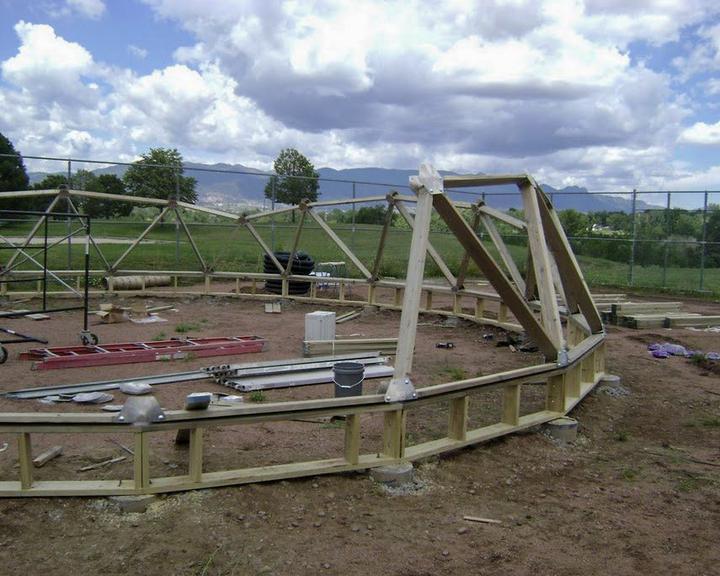
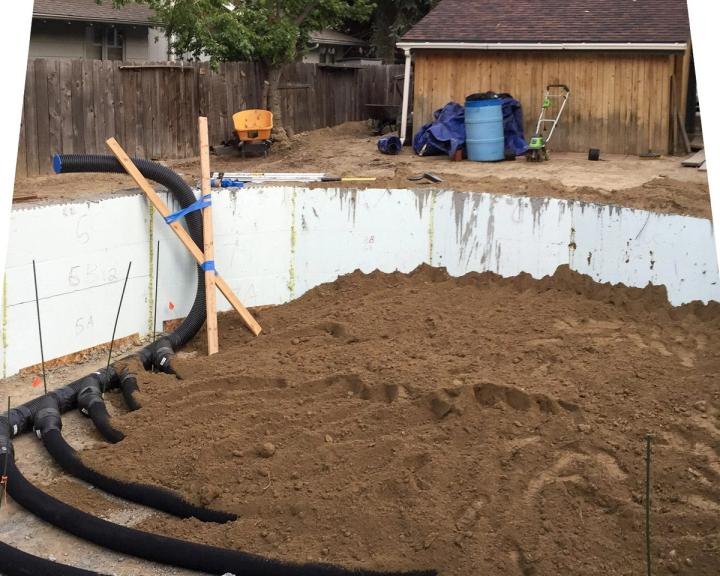
In some installations, owners choose to build on an insulated concrete foundation, but concrete is not required for structural integrity at most sites. Always check with your local building department to fully understand your local building codes and requirements.
Proper site preparation is critical. Compacted gravel, correct leveling, drainage, and secure anchoring all work together to resist both lateral wind pressure and uplift forces. When installed correctly, wind loads transfer safely into the ground rather than stressing the glazing or structure. A well-prepared base turns the dome from a lightweight structure into a deeply rooted, storm-ready system.
How Windy Can It Get?
Thanks to its shape and structure, a properly installed Growing Dome can handle extreme wind conditions that regularly damage conventional greenhouses. Growing Domes are heavy-duty greenhouse kits engineered and tested to withstand wind speeds up to 115 mph when properly installed and anchored. The kit can be modified for higher wind speeds. Contact one of our Dome Advisors today for more information, or call us at 800-753-9333.
For size- and foundation-specific values, compare the published Growing Dome wind capacities before selecting a configuration for your site.
Many customers have reported their domes remaining intact during hurricane-force wind events. However, because site conditions, installation quality, debris impact, and storm dynamics vary, no greenhouse manufacturer—including Growing Spaces—can guarantee performance in every extreme weather scenario.
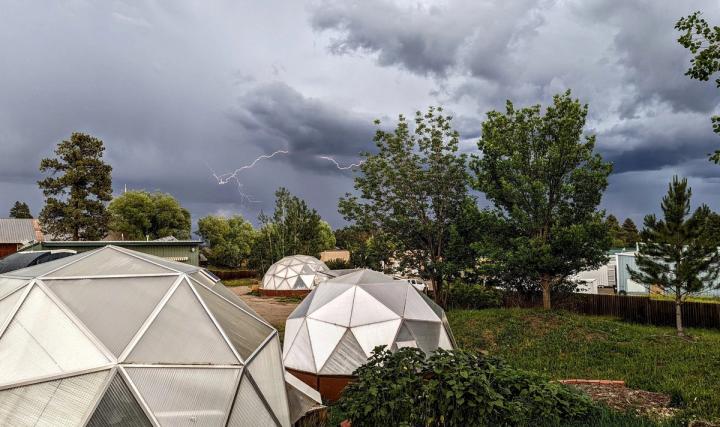
15′ Growing Dome Greenhouse Survives Hurricane Force Winds in Pine, CO

“I just wanted to let you know that our dome survived the recent hurricane-force winds and all the flying debris such as broken tree branches. We had gusts of winds measuring up to 115 mph (but that is as high as the anemometer will register). All around the dome, there was destruction and chaos of debris. The dome survived beautifully. Thank you for providing such a quality product. I love my Growing Spaces Dome!” – Happy Growing Dome Owner
Growing Dome vs Traditional Greenhouse in Wind
| Feature | Growing Dome | Traditional Greenhouse |
|---|---|---|
| Wind Resistance | Excellent | Limited |
| Shape | Curved, Aerodynamic | Flat Wall, Sharp Edges |
| Force Distribution | Even Across Structure | Concentrated at Corners |
| Panel Durability | Premium Polycarbonate | Twin Wall Polycarbonate or Glass |
| Long-Term Reliability | Very High | Variable |
The difference comes down to physics. Domes disperse force. Flat walls absorb it. The Growing Dome is especially well-suited for growers in open, exposed locations such as plains, ridgelines, coastal zones, and high deserts where sustained winds or sudden gusts are a regular concern.
In more sheltered backyards with fencing, tree cover, or windbreaks, other greenhouse styles may perform adequately. But in consistently windy environments, aerodynamic design becomes critical. If wind can flow around a structure instead of slamming into it, the entire system lasts longer.

Added Benefits Beyond Wind Resistance
Choosing the Growing Dome for a windy site also delivers additional advantages:
- Year-round growing with better temperature stability
- Energy efficiency from the dome’s natural air circulation
- Long lifespan with minimal maintenance
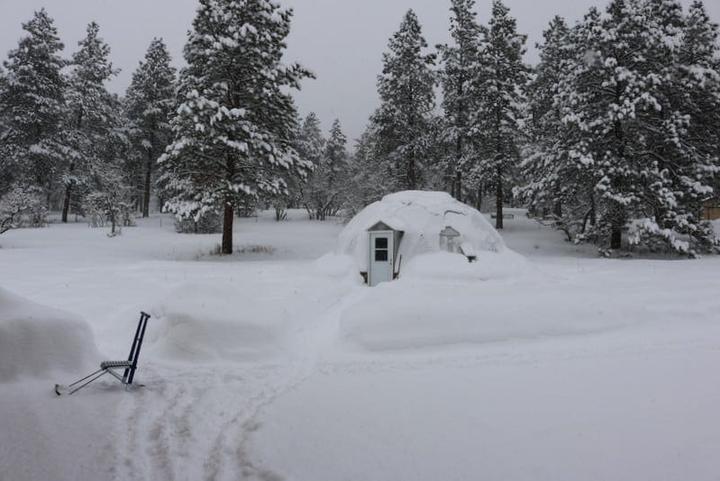
- Resilience to snow, hail, and heavy rain
The Best Greenhouse for Wind
If you live in a windy area and want a greenhouse that lasts, the answer is clear. The Growing Dome greenhouse combines aerodynamic design, geodesic strength, durable materials, and secure anchoring to create the best greenhouse for wind available today. Instead of repairing damage after every storm, you can focus on what matters most: growing food, plants, and abundance in any climate.
Frequently Asked Questions About the Best Greenhouse For Wind
What is the best greenhouse for wind?
A greenhouse with a curved, aerodynamic shape and a load-distributing frame performs best in high winds, like the Growing Dome greenhouse.
What wind speeds can the best greenhouse for wind withstand?
Wind performance depends on installation and anchoring, but geodesic dome structures are widely used in environments that experience sustained winds over 60 mph and gusts exceeding 80-100 mph. The Growing Dome is engineered for wind loads up to 115 mph. The kit can be modified for higher wind speeds.
Are dome greenhouses more wind-resistant than traditional greenhouses?
Yes. Compared to rectangular, hoop, or A-frame greenhouses, domes have no large flat walls, fewer pressure points, and a geometry that spreads force across the entire structure.
Why does greenhouse shape matter so much in wind?
Wind behaves like flowing water. When it hits a flat surface, pressure builds quickly. When it encounters a curved surface, it flows smoothly around it. Curved greenhouse designs reduce wind pressure and structural stress making them the best greenhouse for wind.
Is the Growing Dome a good choice for windy climates?
For growers in open, exposed, or storm-prone areas, the Growing Dome is specifically designed to handle challenging wind conditions. Its geodesic structure, durable polycarbonate panels, and secure foundation make it a long-term solution for locations where conventional greenhouses often fail.

Seasonal Growing Tips & Greenhouse Advice
Monthly stories from our greenhouses, Growing Dome spotlights, and other gardening content


Share This

I graduated from Fort Lewis College in 2018 with a BA in Environmental Studies. I began working for Growing Spaces in August of 2020 and have had the pleasure of working in many departments. I enjoy being a part of this amazing team that helps others achieve their dream gardens! In my spare time, I enjoy working in the 15’ Growing Dome that my husband and I share.
View full bioDownloads
Featured Categories
Seasonal Growing Tips & Greenhouse Advice
Monthly stories from our greenhouses, Growing Dome spotlights, and other gardening content
Featured Stories


Growing Dome Photo Contest 2026


How the Growzebo™ Came to Life

Featured Products


Sign up for The Happy Grower Newsletter
Once a month: stories from our gardens, Growing Dome spotlights, and what's in season in Pagosa Springs.