Greenhouses a Growing Interest in Colorado Communities

Greenhouses a growing interest amongst Colorado
Janet Urquhart The Aspen Times Aspen, Colorado
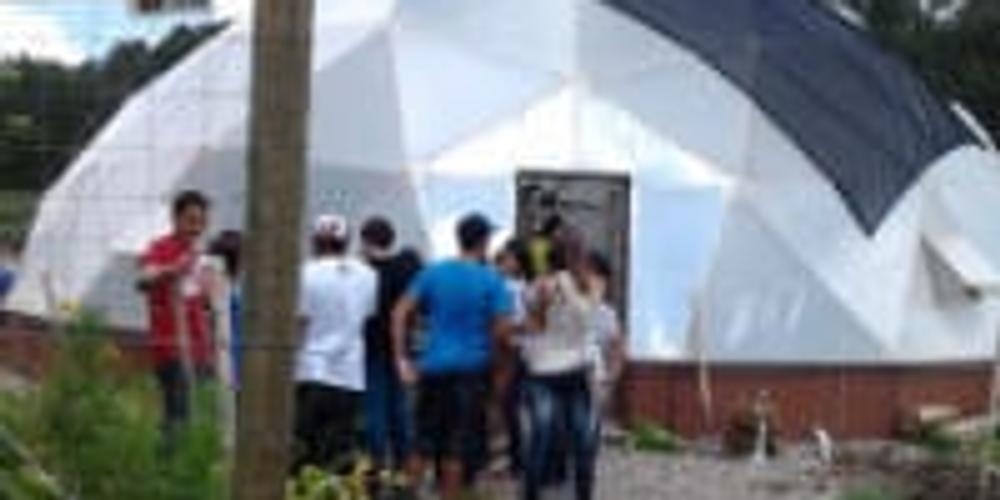
Greenhouses like the new dome behind Roaring Fork High School in Carbondale, Colorado could become a more common sight in the Roaring Fork Valley. Pitkin County is contemplating code changes to better accommodate greenhouses.
With community gardens cropping up around the Roaring Fork Valley, it may be only a matter of time before the first community greenhouse sprouts in somebody’s neighborhood.
As the “eat local” movement grows among those with a green thumb or, at least, a longing for fresh greens, so too is the interest in greenhouses. The need for a lengthened growing season certainly is not lost on anyone who has tried to grow a tomato between the last snow of spring and the first frost of fall in Aspen, or even Basalt.
But in Pitkin County, where 30 years of land-use regulation has focused on reining in development, loosening up the rules for backyard greenhouses could mean a whole new chapter in the local land-use code.
“If we really want to promote agriculture, isn’t a greenhouse in the backyard just as important as some big commercial operation? I’d say yeah,” said Cindy Houben, head of the county’s Community Development Department. Her staff is tackling the issue, which could include the need to accommodate community greenhouses that serve a neighborhood or the members of a cooperative venture.
At present, greenhouses are lumped in with barns in the county’s land-use code, and count as part of the allowed floor area for a house on lots of less than 20 acres. Properties larger than 20 acres but less than 160 acres in size are allowed a barn (or greenhouse) of up to 58 square feet per acre and it doesn’t count toward the floor area maximum. A property of more than 160 acres doesn’t face any limits on agricultural building size.
County planners have suggested allocating 120 square feet for a private greenhouse as a floor-area freebie, but a committee of citizens interested in the issue has suggested 200 square feet instead — sufficient space for a detached structure that won’t conveniently become part of the living quarters instead of functioning as a greenhouse. The committee also urged the county to regulate greenhouses separately from other agricultural buildings.
The county’s wariness when it comes to handing out extra floor area is understandable, said Michael Thompson, an architect and greenhouse designer who helped draft the committee’s recommendations. “They’re afraid people will build a greenhouse and store a Porche in it,” he said.
Thompson and Jerome Osentowski, whose Central Rocky Mountain Permaculture Institute on Basalt Mountain is a showcase of year-round greenhouse agriculture, have teamed up in EcoSystems Design Inc., designing greenhouse environments like the new Growing Dome greenhouse that will celebrate its official opening at Roaring Fork High School in Carbondale on Aug. 1. Thompson and Osentowski envision regulations that allow virtually anyone to grow their own food on some level in a backyard greenhouse, and that accommodate a large-scale commercial operation, should there be an interest.
There is interest in greenhouse operations among some ranchers in the valley, according to Thompson, and Osentowski says Whole Foods, which intends to open a store at Willits in Basalt, is interested in locally grown products and the possibilities a greenhouse offers.
“If we want to become sustainable here, we can’t get all our vegetables from Paonia,” Osentowski said. “We can do it here. We have a lot of land.”
“We could have quite a robust local food economy,” Thompson agreed.
To foster small-scale food production, the county is being urged to simplify its rules for the would-be, backyard greenhouse gardener.
Senior planner Suzanne Wolff said she has spoken with individuals who are interested in putting up a greenhouse, but none have gone through the hoops currently required by the code.
“When we say we treat it like any other accessory structure — it has to go to land-use review — then they’re not so psyched,” she said.
It may be a gardener’s neighbors who are less than thrilled, depending on the size of the greenhouses that go up, if the county starts allowing extra floor area for such endeavors, Houben noted. “How big is it before it ceases to be a family, backyard greenhouse?” she mused. “We’re supportive, we just need to figure it out.”
Learn more about a geodesic Growing Dome greenhouse for your community

Seasonal Growing Tips & Greenhouse Advice
Monthly stories from our greenhouses, Growing Dome spotlights, and other gardening content


Share This

Guest Contributors
Posts under this byline come from customers, partners, and friends of Growing Spaces who had something worth sharing. Each one is written by a real person; the contributor is credited on the post itself.
View full bioDownloads
Featured Categories
Seasonal Growing Tips & Greenhouse Advice
Monthly stories from our greenhouses, Growing Dome spotlights, and other gardening content
Featured Stories


Growing Dome Photo Contest 2026
Featured Products


Sign up for The Happy Grower Newsletter
Once a month: stories from our gardens, Growing Dome spotlights, and what's in season in Pagosa Springs.