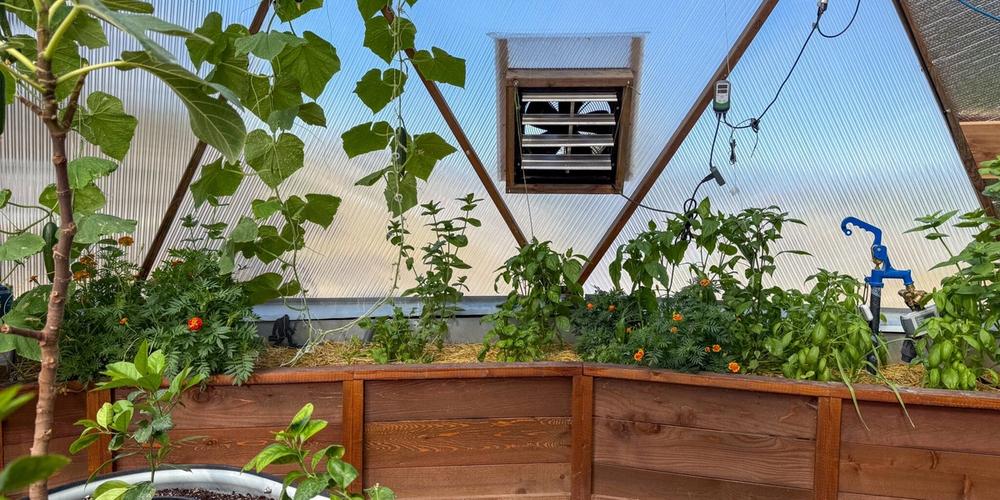
Greenhouse Automation: Freedom & Food Security in a Dome

- This article contains affiliate links
Why Greenhouse Automation Matters
For many growers, a greenhouse is the key to fresh food and year-round harvests. But it can also be demanding, with daily chores like watering, climate control, and pest management. That’s why more people are turning to greenhouse automation.
Automated greenhouse systems use technology and natural processes to handle routine work. With the right setup, you can water plants precisely, control temperature and humidity, and even manage pests, all with less effort.
Steve’s 33-foot Growing Dome shows what’s possible. A frequent traveler, he wanted fresh food without being tied down. By designing a self-regulating greenhouse, he created a space that nearly runs itself, allowing him to explore the world while his garden thrives.


Power and Infrastructure
Automation only works when the foundation is solid. Steve began by running a 50-amp electrical service to his dome. Five interior circuits power heaters, fans, and other equipment. Because his property already runs on solar, he added Growing Spaces’ AC options for the fountain and fans.

He also ran a dedicated water line right into the dome, with a spigot that comes up out of his west bed. Is it better to place a spigot inside or outside the structure? It really depends on who you ask. For optimists, having the spigot inside makes daily use easier; watering, filling containers, and making quick adjustments are all more convenient. But for those who like to plan for every “what if,” outside is safer in the event of a catastrophic leak or failure. Steve chose the inside option, prioritizing usability and efficiency.
One challenge he faced was his undersoil ventilation system. At the time, it lacked an AC option, so Steve added a 12V DC buck converter to protect the fan from voltage spikes.
This backbone of power and water may not sound glamorous, but it’s critical to a reliable system. For Steve, strong infrastructure ensures that his greenhouse automation systems can operate smoothly, even when he’s hundreds of miles away.
Remote Management from Anywhere
Technology makes greenhouse automation even more powerful. Using a TP-Link powerline adapter, Steve extended internet access into the dome. Now he enjoys speeds of around 30 Mbps, more than enough for monitoring and control.
With greenhouse WiFi automation, Steve can manage his dome from anywhere. On his phone, he checks irrigation zones, reviews temperature sensors, or makes adjustments. He basically carries an 850-square-foot greenhouse in his pocket.
Automated Irrigation: Smarter Watering, Less Work
Watering is one of the most time-consuming greenhouse tasks. Steve solved this with a dedicated water line and a drip irrigation system. At the center is a Rachio 8-zone controller. Four zones are active now, covering perimeter beds, with room to expand later.
Each zone is programmed individually, delivering 1.5–3.5 inches of water per week, depending on the season and the crops he is growing. Morning and evening cycles run automatically, but Steve can adjust everything from his phone. If the weather shifts, he simply changes the schedule remotely.

Automated irrigation doesn’t have to be complicated. Steve started with this simple system inspired by square foot gardening, which he used for many months before getting the sensors set up. This system uses a garden hose and a timer to water with ease.
This automated irrigation system saves time and prevents waste. Unlike manual watering, it delivers the right amount to each plant’s roots, cutting evaporation and overwatering. For Steve, it’s one of the most effective greenhouse automations he uses.
PRO TIP: Weed-free straw with tack can be used to help retain moisture in the soil. Once this straw becomes wet, it sticks together. No more straw blowing around once the fans turn on!

Climate Controlled Greenhouse Automation
A stable climate is the difference between stressed crops and thriving ones. Steve uses greenhouse climate control to manage the dome’s environment:
- Fans: Two horizontal airflow fans run daily from 9 a.m. to sundown, controlled through the Wyze app. Intake fans are on Inkbird temperature controls, with plans for WiFi upgrades.
- Sensors: Six Inkbird monitors track temperature and humidity in different zones, providing real-time feedback.
- Heaters: Two Bio Green greenhouse heaters turn on automatically when the temperature drops below 50°F. Even during -5°F winters, they kept key areas above freezing.
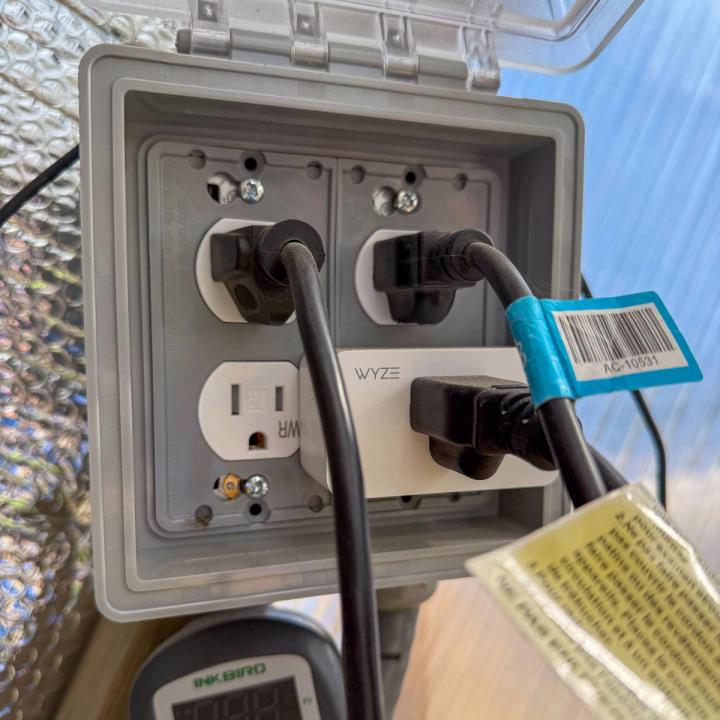
Wyze Wifi Controller
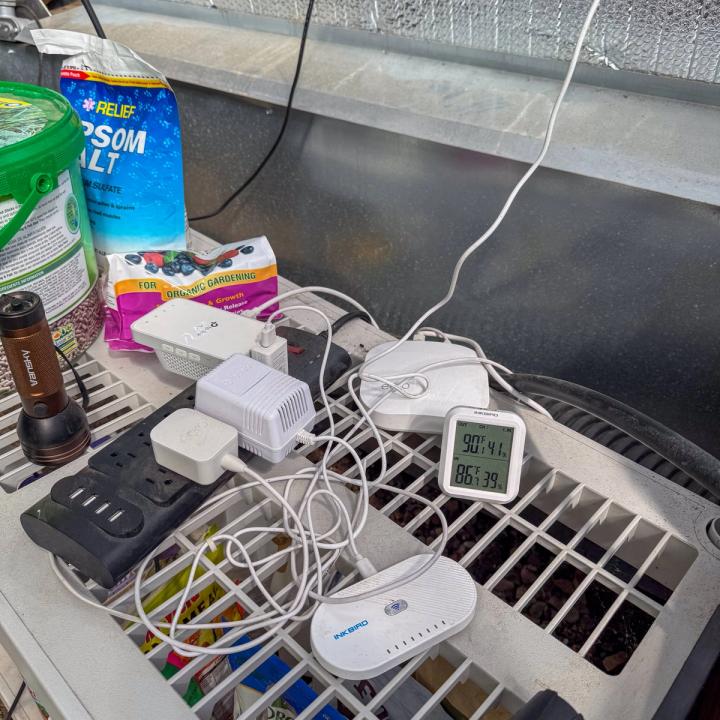
Various Wifi Components and Sensors
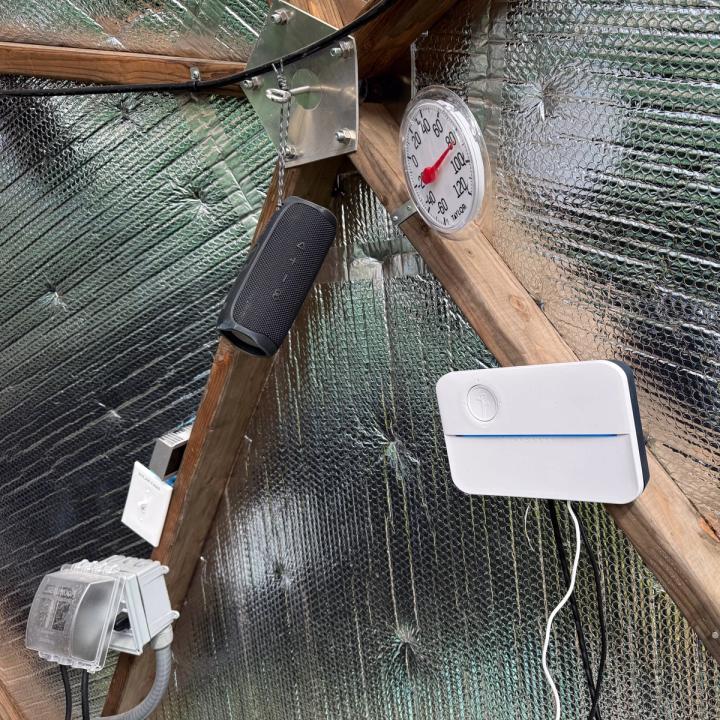
Irrigation Control Module
These systems free Steve from constant monitoring. Instead of reacting to weather shifts, he knows his dome is already responding.
Low-Tech Greenhouse Automation

Not all of Steve’s strategies involve wires, apps, or high-tech systems. Some of his most effective methods are surprisingly simple. Take the Socrates cucumbers in his west bed. These plants are self-pollinating, which means they reliably produce fruit without hand-pollination or the help of outside insects. It is a natural form of greenhouse automation built into the plant itself.
His approach to pest control follows the same philosophy, leaning on integrated pest management practices. Instead of chemicals or complicated gadgets, he introduced ladybugs. Once released into the dome, they immediately began targeting a rampant aphid population. Within days, the outbreak was under control and the plants were recovering. Beneficial insects like these are self-regulating: once their food source disappears, they move on, leaving behind a balanced ecosystem.
Another strategy he uses is the sacrificial plant method, a core principle of integrated pest management. Since pests are naturally drawn to certain crops, Steve intentionally plants a decoy crop that serves as a magnet. Once it becomes infested, he simply removes and replaces it, protecting the rest of his greenhouse from widespread damage.
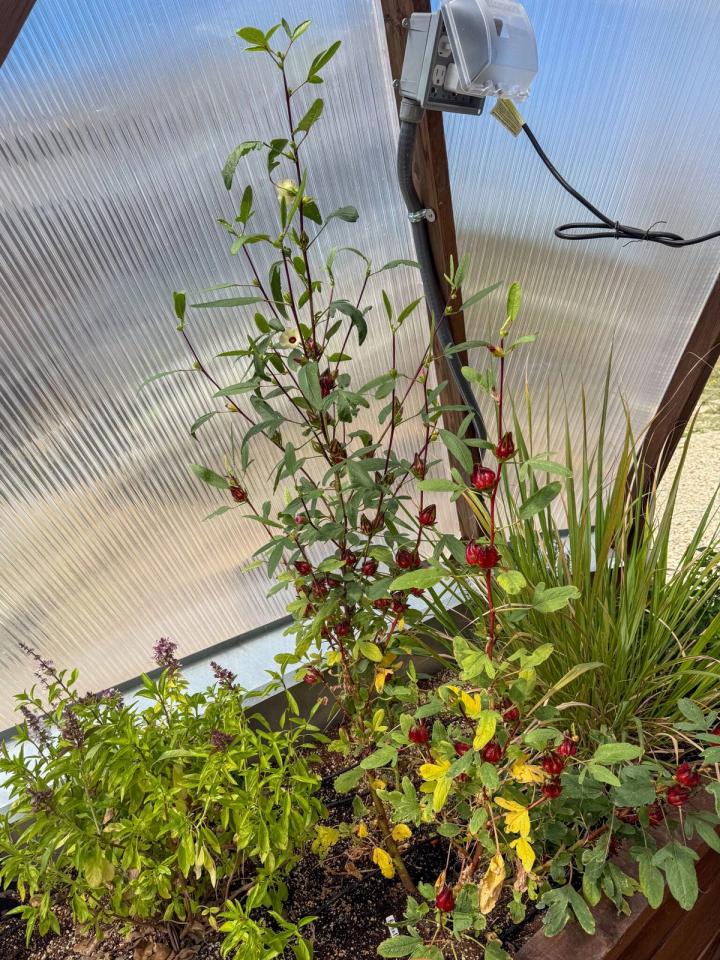
Red Zinger Tea Plant
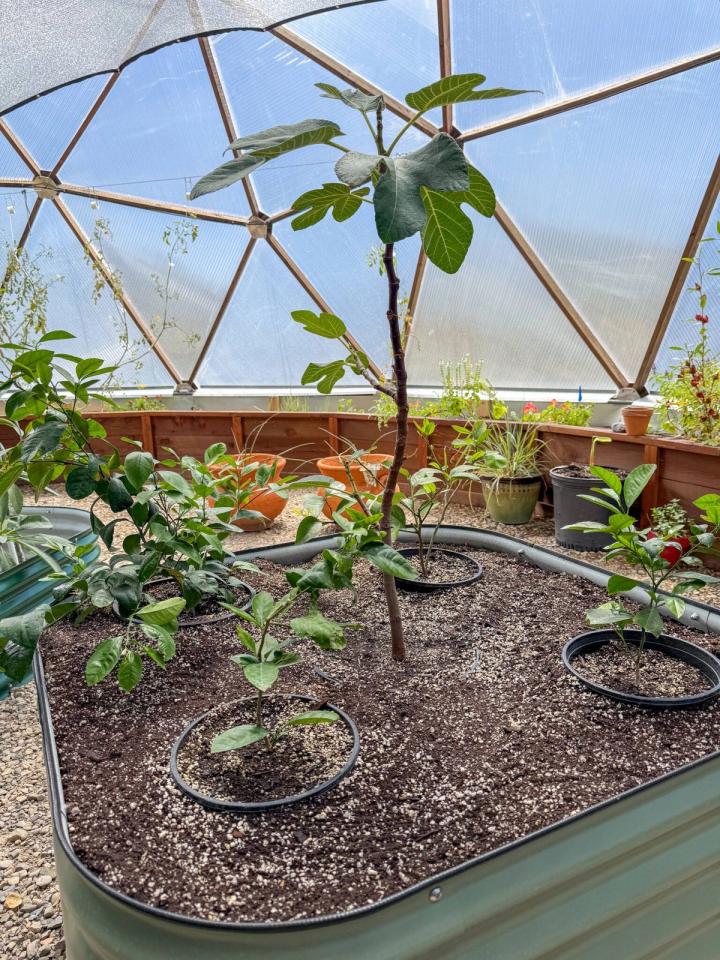
Fig and Lemon Trees
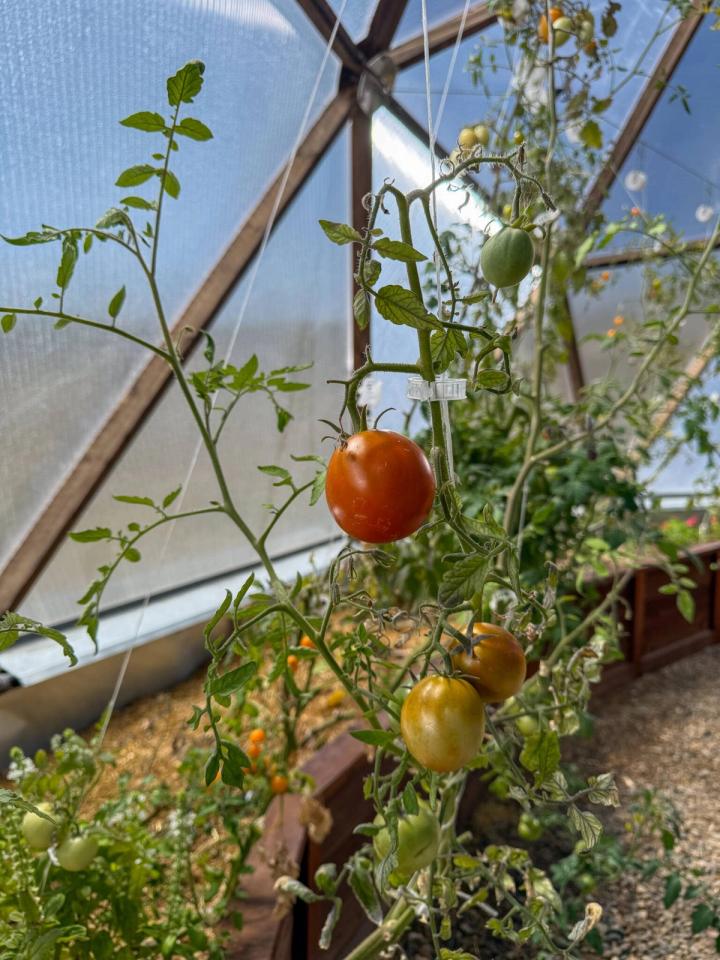
Tomatoes
By planting wisely and designing with simplicity in mind, Steve reduces the chores that might otherwise disrupt his travels. Every thoughtful choice, from self-pollinating cucumbers to beneficial insects and sacrificial crops, allows the greenhouse to manage itself in subtle but powerful ways.
The Human Element: The Domesters
Even the best systems need a human touch. Harvesting and fish feeding can’t be automated, so Steve relies on his friends—the “Domesters.” Six people check in on the dome, sending updates and photos while Steve is away. Their visits reassure him that the greenhouse isn’t just surviving but thriving. Automation handles the grind, and friends enjoy the harvest.
Food Security Through Smart Systems
Steve’s 33-foot Growing Dome is a model of what’s possible with automated greenhouse systems. By combining smart technology, natural solutions, and community support, he built a greenhouse that almost runs itself.
Greenhouse automation doesn’t replace the gardener. It empowers them. With systems handling the daily grind, gardeners can focus on enjoying fresh food, exploring new horizons, and living life on their own terms.

Planning a greenhouse around daily chores, travel, and backup care? Compare greenhouse kits for homesteads and small farms.

Seasonal Growing Tips & Greenhouse Advice
Monthly stories from our greenhouses, Growing Dome spotlights, and other gardening content


Share This

I graduated from Fort Lewis College in 2018 with a BA in Environmental Studies. I began working for Growing Spaces in August of 2020 and have had the pleasure of working in many departments. I enjoy being a part of this amazing team that helps others achieve their dream gardens! In my spare time, I enjoy working in the 15’ Growing Dome that my husband and I share.
View full bioDownloads
Featured Categories
Seasonal Growing Tips & Greenhouse Advice
Monthly stories from our greenhouses, Growing Dome spotlights, and other gardening content
Featured Stories


Growing Dome Photo Contest 2026


How the Growzebo™ Came to Life

Featured Products


Sign up for The Happy Grower Newsletter
Once a month: stories from our gardens, Growing Dome spotlights, and what's in season in Pagosa Springs.