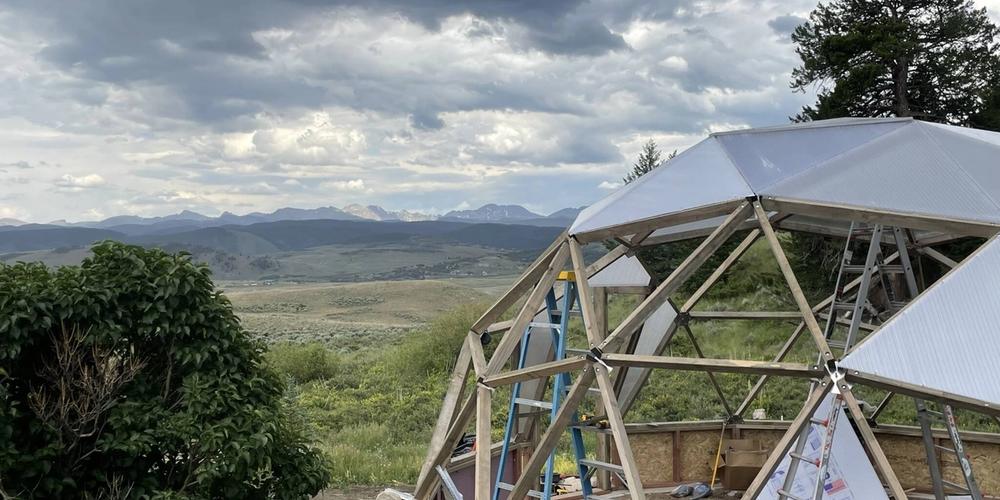
The Truth About Growing Dome Installation Options

One of the first questions we help customers answer is simple but important: How hands-on do you want to be when building your Growing Dome? This helps us guide you to the right installation options.
There’s no one right answer. Many Growing Spaces customers successfully build their own domes. Others choose different levels of professional support. The goal is the same for everyone: to end up with a strong, beautiful Growing Dome you can enjoy for many years to come.
Our goal is to make sure that you clearly understand what each installation option involves, so you can choose the path that fits your budget, comfort level, and physical capabilities.
Setting Expectations
No matter which installation option you choose, building a Growing Dome is a real construction project.
It’s a rewarding experience, but it does involve:
- Working on ladders and being comfortable at height
- Using a rope and harness on larger domes
- Using hand tools such as shovels, sledge hammers, and pick axes
- Operating power tools such as drills, impact drivers, and saws
- Handling large and sometimes awkward components
- Examples include: 4’ x 10’ long pieces of sheet metal, 50lb bags of sand, pre-hung steel doors, large polycarbonate panels
- Spending multiple days actively building outdoors
- Spending multiple days inside the greenhouse installing the internal components. During this time, the greenhouse can get really hot. Heat stroke and dehydration could be concerns.
- Following instructions step by step
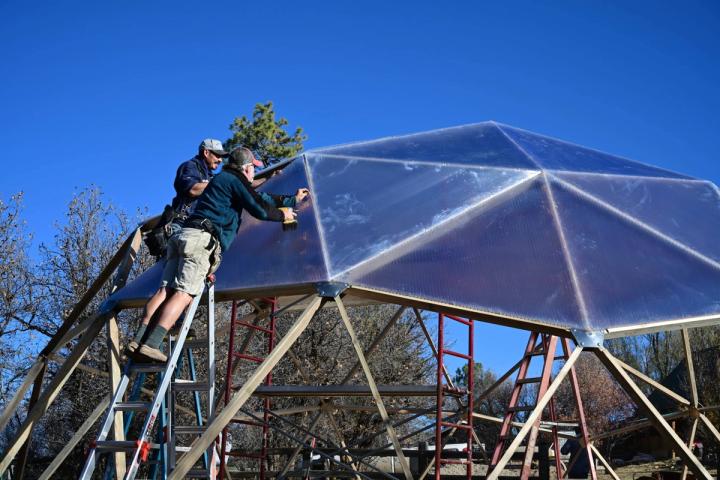
Many customers, especially those with building, homesteading, or other construction experience, find this kind of work satisfying and empowering. Others prefer to share the load or have more support. Both approaches are completely valid.
Requirements, No Matter the Installation Options
No matter how hands-on or supported your installation path is, every Growing Dome build begins with owner-prepared groundwork. This applies to DIY builds as well as Supervisor and Full Crew installations. Think of this as setting the stage so the actual dome construction can move forward smoothly and safely.
Site Preparation
The dome must be built on a flat, level surface. This is essential for proper assembly, structural integrity, and long-term performance.
Owners are responsible for:
- Choosing the build location
- Making sure the site is flat and level
- Receiving the shipment, which may require a forklift or tractor with a fork attachment
- Providing clear access to the site for materials, tools, and people
Foundation
The foundation must be fully completed before dome construction starts.
Common foundation options include:
- Compacted gravel base
- Concrete piers
- Insulated Concrete Forms (ICF)
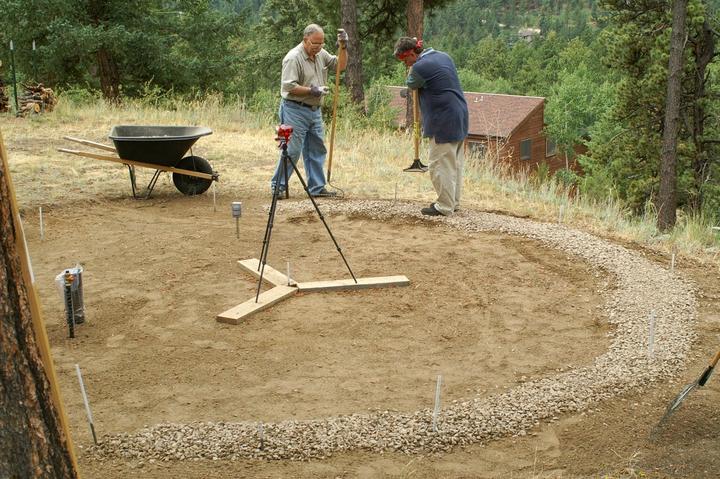
Compacted Gravel
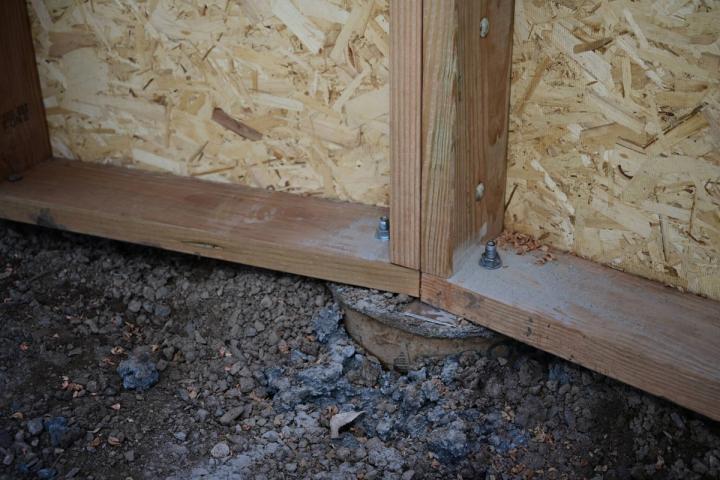
Concrete Piers
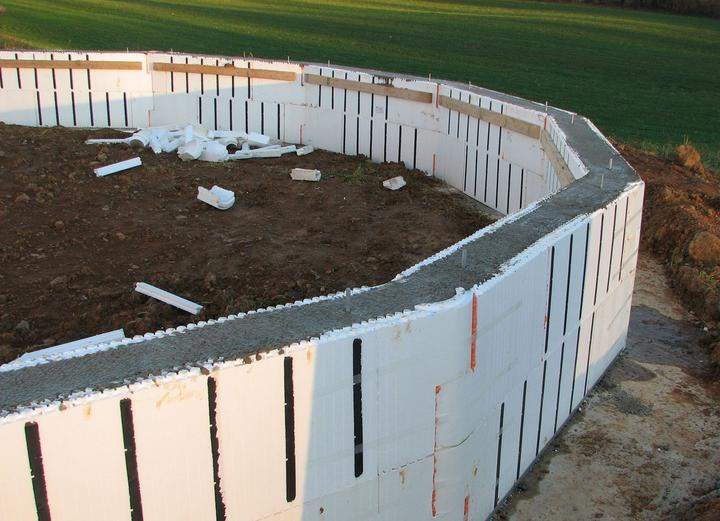
Insulated Concrete Forms
Which foundation is right for you depends on your climate, site conditions, and how you plan to use your dome. Regardless of the type, the foundation must be built to specification and ready before installation begins.
Utilities

If your Growing Dome will include utilities, these should be planned and prepared ahead of time.
This may include:
- Electrical service
- Water supply
- Special drainage considerations
- Any other site-specific infrastructure, such as a climate battery
Utility rough-ins are typically much easier to complete before the dome is built, even if you aren’t sure where exactly you want the stub-ups or hydrants to be. Planning utilities early helps avoid extra work or retrofits later. Most customers find it best to dig trenches and lay conduit while foundation work is happening to avoid having to rent equipment multiple times and dig up compacted gravel. That being said, you can run utilities after the Dome is built with some additional work.
Owner-Supplied Items

In addition to the dome kit, some components and materials are owner-supplied. These items must be ordered, delivered, and available on site before the build begins.
This includes:
- Owner-supplied materials, including the sheet metal and sand for the above-ground pond, and a few other items easily sourced from your local hardware store
- Tools or equipment needed for your chosen installation option
Having everything ready ahead of time helps keep the build on schedule and reduces unnecessary delays.
What Delays Construction Most Often (and How to Avoid)
Most Growing Dome build delays aren’t caused by the dome itself. They’re usually the result of a few common, outside factors that are worth planning for early.
The most common causes of delays are:
- Permitting timelines: Local permits can take longer than expected, especially during busy seasons. Starting the permitting process early helps prevent last-minute scheduling changes.
- Weather: Because Growing Domes are built outdoors, weather plays a role. Heavy rain, snow, extreme heat, or high winds can pause construction for safety and quality reasons.
- Incomplete site preparation: A site that isn’t fully level, accessible, or ready when installation begins slows the whole process down. Taking the time to complete site prep, foundation work, and utility planning ahead of time makes a big difference.
Planning for these factors upfront keeps the build moving as smoothly as possible, no matter which installation option you choose.

How Dome Size Can Impact Your Installation Options

Dome size plays an important role in how demanding the build will feel. While all Growing Domes use the same basic construction principles, the physical effort, time commitment, and amount of work at height increase as the dome gets larger. For many customers, smaller domes, such as 15′ or 18′ models, are quite manageable as DIY or Supervisor-led builds. These sizes often allow people to work at a steady pace, spend less time on ladders, and break the project into more manageable stages, which can be especially appealing for those balancing budget considerations with hands-on involvement.
Larger domes, such as a 42′ Growing Dome, represent a much bigger construction effort. The number of components increases, working at height becomes more frequent, and building typically requires more coordination and sustained physical energy. Multiple layers of scaffolding and rope/harnesses are needed for construction. While some experienced builders do take on large domes themselves, many customers find that additional professional support makes the process safer, more efficient, and far more enjoyable. For larger domes, Supervisor+1 or Full Crew installation options are often the most comfortable and sustainable choice. Matching the dome size with the right level of support helps ensure the build feels achievable rather than overwhelming.
The Four Growing Dome Installation Options
With those considerations in mind, here’s how the installation options differ.
DIY Installation Options

Best for:
- Hands-on builders with construction experience or other DIY experience
- Customers who enjoy physical work and problem-solving
- Those with reliable help and flexible time
What DIY Really Looks Like
With a DIY build, you are leading the construction. You’ll be organizing helpers, managing tools and materials, and doing the physical assembly. You are responsible for reading through the instructions carefully and following the detailed diagrams and videos provided. Many DIY customers compare the experience to framing a structure, though the geodesic shape is inherently different than a rectangular structure. For the right person, it’s deeply satisfying and the most budget-friendly way to build a Growing Dome.
Supervisor Installation Option

Best for:
- Capable DIYers who want expert guidance
- Customers who value added confidence and safety
- Builds where owner-supplied labor is available
How a Supervisor Helps
A certified Growing Spaces Supervisor is on site to guide the build, keep everything on sequence, and help prevent costly or frustrating mistakes, especially during more complex stages. You (and/or your helpers) are still doing the hands-on construction, while the Supervisor provides leadership, expertise, and momentum. The supervisor is not there to simply oversee the project; they will be hands-on and working on the structure throughout the process as well. Because you and/or your crew are still performing a majority of the work, we provide a supervisor for a certain number of hours. It is up to you to stay on task in order to complete the entire build before the supervisor leaves.
Supervisor +1 Installation Option

Best for:
- Customers with fewer helpers
- Customers who want to stay involved without carrying the full physical load
- Anyone looking for a smoother, more efficient build
Why Customers Choose This Option
Supervisor +1 combines expert oversight with additional professional labor. Many customers find this option offers an excellent balance between budget, support, and physical requirements. You remain involved in the process, just with more help and less strain. This installation option is similar to the Supervisor option in that you are provided with trained crew members for a certain number of hours. Anything not completed in the allotted time will be the responsibility of the owner. We will always do our best to complete the job before leaving. But if, for some reason, we are unable to do so, we provide you with detailed instructions and guidance on any work left outstanding.
Full Crew Installation

Best for:
- Customers who prefer minimal physical involvement
- Those with health, mobility, or time considerations
- Anyone wanting the fastest, most supported build experience
What to expect
A trained Growing Spaces crew completes the dome construction on your prepared site. Owners still handle site prep and foundation work, but the physical build is completed and managed by the crew. You will still need to provide certain tools, such as ladders and/or scaffolding, as our crew often flies to you and cannot bring these larger items. This option prioritizes ease, safety, and efficiency. We provide all crew members, guarantee the completion of the structure, and offer a limited workmanship guarantee.
Installation Options at a Glance
| Installation Option | Who Does the Physical Build | Physical Demand | Budget Impact | Best For |
|---|---|---|---|---|
| DIY | Owners | High | Lowest | Experienced, hands-on builders |
| Supervisor | GS Crew Member + Owners | High – Moderate | Low – Moderate | DIYers wanting guidance |
| Supervisor +1 | Shared with GS Crew | Moderate | Moderate | Balanced support & budget |
| Full Crew | GS Crew | Low | Highest | Least hands-on approach |
A Quick Self-Check Before Choosing
You may be a good fit for DIY or Supervisor if:
- You’re comfortable on ladders and at height
- You regularly use power tools or are willing to learn
- You can lift and maneuver large materials
- You have dependable helpers
- You enjoy being actively involved in construction
You may prefer Supervisor +1 or Full Crew if:
- Heights feel challenging
- Physical endurance is a concern
- You have limited help available
- You want to protect your energy and health
- You prefer a lower-stress build experience
Many Growing Spaces customers are balancing fixed incomes, physical limits, or both. Choosing the right installation option is about finding a path that lets you complete the build safely, confidently, and without burnout. After the build is complete comes what we think is the extra fun part, designing the interior and planting your dream garden. There’s no wrong choice, only the one that fits you best. If you’d like help thinking through your installation options, our advisors are always happy to talk it over with you!


Seasonal Growing Tips & Greenhouse Advice
Monthly stories from our greenhouses, Growing Dome spotlights, and other gardening content


Share This

I graduated from Fort Lewis College in 2018 with a BA in Environmental Studies. I began working for Growing Spaces in August of 2020 and have had the pleasure of working in many departments. I enjoy being a part of this amazing team that helps others achieve their dream gardens! In my spare time, I enjoy working in the 15’ Growing Dome that my husband and I share.
View full bioDownloads
Featured Categories
Seasonal Growing Tips & Greenhouse Advice
Monthly stories from our greenhouses, Growing Dome spotlights, and other gardening content
Featured Stories


Growing Dome Photo Contest 2026


How the Growzebo™ Came to Life

Featured Products


Sign up for The Happy Grower Newsletter
Once a month: stories from our gardens, Growing Dome spotlights, and what's in season in Pagosa Springs.