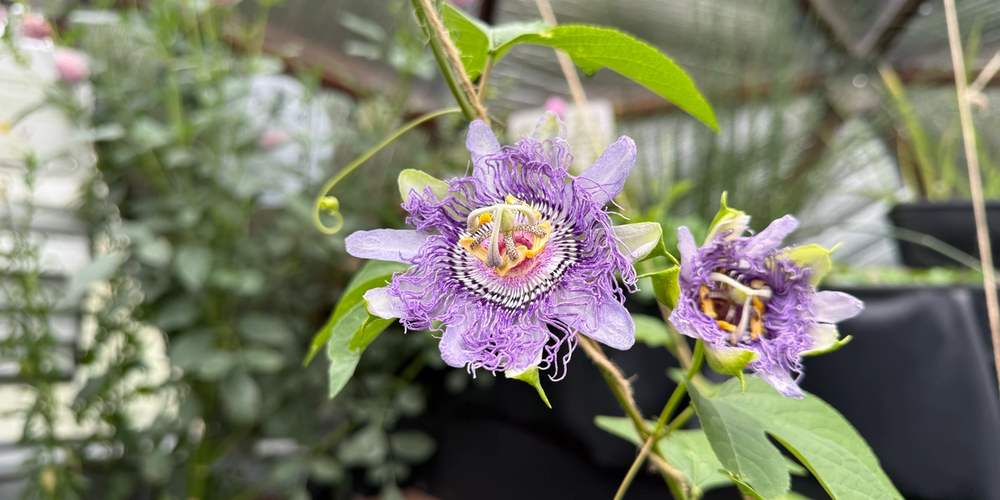
Passion Flower Power: Growing Maypop Vines for Flowers, Fruit & Pollinators


Growing Passion Flower
Some plants are useful. Some are beautiful. Passion flower is lucky enough to be both.
This vigorous vine produces some of the most unusual flowers you can grow, with purple and white blooms that look almost tropical. It also attracts bees, butterflies, and hummingbirds and, with the right growing conditions and pollination, can produce edible fruit known as maypops, a type of hardy passion fruit with sweet-tart pulp. If you have heard gardeners talk about growing passion fruit in a backyard garden or greenhouse, this is often the hardy passion flower they mean.
Passion flower vines love warmth, sunshine, and something sturdy to climb. In a Growing Dome, they can add shade, beauty, and vertical interest. In an outdoor garden, they can cover a trellis, fence, arbor, or pergola while supporting pollinators and adding a little wild garden drama.
Growing Spaces Note: The ripe fruit is edible, but the leaves and stems are not recommended for people or pets. Plant with care if you garden with children, dogs, cats, or other animals.
Plant Snapshot
- Family: Passifloraceae
- Scientific Name: Passiflora incarnata
- Common Names: Passion flower, passionflower, maypop, passion vine
- Plant Type: Perennial vine
- Light: Full sun to part shade
- Soil: Moist, well-draining soil
- Soil pH: Slightly acidic to neutral
- USDA Zones: 5-9, with season extension possible in a Growing Dome
- Fruit: Edible maypops, also known as hardy passion fruit, when fully ripe
- Best For: Trellises, pollinator gardens, edible landscapes, greenhouses, arbors, and fences
Free Download
Why Grow Passion Flower?
Passion flower earns its space in the garden in more ways than one. The flowers are showy enough to grow as an ornamental, the vines are vigorous enough to create summer shade, and the blooms are loved by pollinators. With good sunlight and pollination, the plant may also produce maypops, the small passion fruit that gives this vine even more charm.
For Growing Dome owners, passion flower can be especially fun because it enjoys the warmth, humidity, and wind protection a greenhouse provides. For outdoor gardeners, it can be a beautiful way to cover a trellis or fence while adding food and habitat to the landscape.
Where to Plant Passion Flower
Passion flower grows best where it has plenty of sun, good drainage, and room to climb. Choose a sturdy trellis, fence, arbor, or pergola before planting, because a happy vine can grow quickly and spread by suckers.
In an outdoor garden, plant passion flower where it receives at least six hours of sun. In hot climates, a little afternoon shade can help prevent stress. In a Growing Dome, the south side is usually a good choice because the plant will receive strong light and steady warmth. A misting system or occasional misting can help keep the vine happy, especially in dry climates.

Growing Spaces Tip: Consider planting passion flower in a large pot or contained bed if you do not want it spreading through your garden bed. This is especially helpful in a greenhouse, where the protected environment can encourage vigorous growth.
How to Plant Passion Flower: Seeds vs. Young Plants
Will you be planting seeds or young plants? Seeds can take one to three months to germinate so young plants may be a better option.
To plant seeds:
- Prior to sowing passion flower seeds, rub the seeds with a fine grit sandpaper to break the outer coat.
- After using sandpaper, soak the seeds in water overnight.
- Plant 1-2 seeds in starter pots and cover with ¼ inch of soil.
- Seeds need warmth to germinate. Keep seeds at a temperature of 75º F using a heating mat and covering pots with plastic wrap to hold moisture in.
- Check soil daily. It should be wet, but not soggy.
- Remove plastic wrap after seedlings appear.
- Once seedlings are a few inches tall and have true leaves, harden them off for 7-10 days prior to planting.

Transplants may be the easier choice for newer gardeners. Dig a hole and place the vine with the root ball at the same level as your garden bed. Tamp the soil down around the vine. Water the vine thoroughly to help remove any air pockets.
Companion Plants
Marigolds, nasturtiums, and borage are helpful companion plants for passion flower in both greenhouse and outdoor gardens. They attract beneficial insects, support pollinators, and can help create a more balanced garden ecosystem.

Nasturtiums can also be climbing plants, but it is best to grow them below on the soil level rather than on the trellis with passion flowers. Nasturtiums help repel pests, but are also used as a trap crop, so you want to be able to easily remove them if they start attracting aphids and other garden pests.
Companion Plants to Avoid
Passion flower does best when it is not competing with other vigorous plants. Give it space away from heavy feeders (corn), sprawling cover crops, legumes, and other climbing vines. Too many vines growing together can block sunlight, reduce airflow, and make pest problems harder to manage.
Passion Flower Care
Light: Passion flower grows best in full sun, with 6 to 8 hours of direct light per day. More sun usually means more flowers and a better chance of producing fruit. In hot climates, passion flowers benefit from afternoon shade.
Temperature: Passion flower likes warm growing conditions. Soil temperatures above 55°F and air temperatures above 60°F are best for active growth. Humidity levels of 60-85% are preferred. These are some of the reasons it grows well in a Growing Dome, where it is protected from wind and supported by more stable temperature and humidity levels.
Soil: Plant in rich, well-draining soil. A slightly acidic to neutral pH is ideal. Test your soil in spring and amend as needed.
Water: Water deeply after planting. Once established, keep the soil evenly moist but not soggy. For container-grown plants, water well, then allow the soil to dry slightly before watering again.
Support: Passion flower climbs by tendrils and needs a trellis, fence, arbor, or other support. Use soft ties if you need to guide young vines.
Pollination: Bees, butterflies, hummingbirds, and other pollinators can help passion flowers set fruit. In a greenhouse, you may need to hand-pollinate passion vines if pollinators are not present.
Pollinating and growing Passion Fruit, recorded by @eina.phets of British Columbia – 42′ Greenhouse
Pruning: Prune in late winter or early spring before active growth begins. During the growing season, trim as needed to improve airflow, guide the vine, and keep it from taking over nearby plants. Pruning also helps restore older vines.
Pests and Diseases
Passion flower is generally not difficult to grow, but common passion flower pests can show up when plants are stressed or airflow is poor. In a greenhouse, watch for spider mites, whiteflies, mealybugs, and scale. Outdoors, aphids may be more common, and some plants can be affected by cucumber mosaic virus.
The best prevention is a healthy garden ecosystem: good airflow, proper spacing, regular observation, and beneficial insects when possible. Remove diseased plant material when needed, and do not compost plants that show signs of virus.

Will Passion Flower Produce Passion Fruit?
Yes, passion flower can produce edible fruit, often called maypops. The fruit is not exactly the same as the tropical purple passion fruit many people buy at the grocery store, but it is closely related and has a sweet-tart, tropical flavor when fully ripe.
For the best chance of fruit, give your vine plenty of sun, consistent moisture, and access to pollinators. In a greenhouse, hand-pollination may help if you are seeing flowers but no fruit. Be patient with young plants, since they may need time to establish before producing heavily.

Harvesting Maypops: When Is Passion Fruit Ripe?
Maypops are usually ready to harvest 60 to 90 days after flowering. The fruit starts green and ripens to a yellow, orange, or pale orange color depending on growing conditions. Ripe fruit will feel slightly soft, smell fragrant, and may develop light wrinkles.
The easiest way to know it is ready is to wait for the fruit to drop from the vine. You can also snip ripe fruit with clippers if you want to harvest before it falls. Inside, the pulp is jelly-like and filled with dark seeds, which are edible but can taste bitter. Eat the pulp fresh, strain it for juice, or save clean, dry seeds for planting.
History, Fun Facts, and Health Benefits

The passion flower genus includes hundreds of species, many from tropical and subtropical regions. The hardy maypop, Passiflora incarnata, is native to parts of the central and eastern United States and has a long history of use by Indigenous peoples. It later became associated with Christian symbolism, which is where the name Passiflora comes from.
Historical medicinal uses of the passion flower include North American tribes utilizing it as a poultice for cuts and bruises as well as for a mild sedative.
Passion fruit is small in comparison to apples or bananas. However, for its small size it offers a lot! This little fruit has vitamins A and C along with calcium, fiber, folate, iron, magnesium, phosphorus and potassium. All of this is packed into just 17 calories per fruit and offers 2 grams of fiber, 8% of the DV (daily value) of vitamin A, 9% DV vitamin C, 2% DV of iron and 2% DV of potassium. The seeds also have benefits. They are a source of fiber, heart-healthy fats, protein and minerals!
FAQs
What are the ideal growing conditions for passion flowers?
They require full sun (6-8 hours daily) and warm temperatures (soil at least 55°F, air above 60°F). They prefer slightly acidic to neutral soil, around 6.0 to 7.5, and need a humidity level of 60-85%.
When should I prune my passion flower vine?
The best time is late winter or early spring before new growth starts. Pruning annually encourages thicker stems, more flowers, and fruit, but do not remove more than a third of the plant.
How can I prevent the vine from spreading too much?
Passion flower vines can spread quickly via suckers. To avoid this, consider planting it in a large pot. A trellis system is also recommended since the vines can grow up to 15 feet long.
Can you grow passion fruit in a greenhouse?
Yes. A greenhouse can provide the warmth, humidity, and wind protection passion flower vines enjoy. In an enclosed greenhouse, hand-pollination may be needed if natural pollinators are not present.
How do I overwinter a passion flower in an unheated greenhouse?
In colder climates, growing passion flower in a pot gives you the option to move it indoors before freezing temperatures arrive. If overwintering it in an unheated greenhouse, cut the plant back to about one-third of its size in early fall and protect the roots from hard freezes.

Does passion flower come back every year?
In suitable climates, passion flower is a perennial vine. In colder areas, it may die back to the ground and return from the roots in spring. A Growing Dome or container planting can help extend the season.
What are the best companion plants for passion flowers?
Marigolds, nasturtiums, and borage are great companions. They help deter pests, attract beneficial insects, and in the case of borage, help improve soil nutrients.
Is passion flower the same as passion fruit?
Passion flower is the vine, and passion fruit is the fruit it can produce. The hardy maypop passion flower, Passiflora incarnata, produces edible fruit commonly called maypops.
How do I know when the passion fruit is ripe?
Passion fruit is usually ready for harvest 60–90 days after flowering. It will change from green to pale orange, be soft to the touch, have a tropical scent, and may develop slight wrinkles in the skin, which indicates sweetness. It is fully ripened when it drops to the soil.
Whether you grow it for the flowers, the pollinators, the shade, or the chance of homegrown maypops, passion flower is a vine that brings a little drama and beauty to the garden. Happy gardening!

Seasonal Growing Tips & Greenhouse Advice
Monthly stories from our greenhouses, Growing Dome spotlights, and other gardening content


Share This

I joined Growing Spaces in 2021 as a gardener and now work with the Marketing and Social Media department. Formerly I was a kindergarten teacher and then worked as a Gardener and Volunteer Coordinator at Maui Nui Botanical Gardens in Hawai'i. Since moving to Colorado I have worked in the veterinary field and have been involved in therapy dog work visiting hospitals, schools and libraries with a national therapy group. My previous dog and I also worked as a crisis response team helping those affected by crises or disasters and were deployed through Hope Animal-Assisted Crisis Response (Hope AACR). Muppet and Maple are my current therapy dogs and we visit the library and hospital here in Pagosa Springs. Muppet is also a crisis response canine with Hope AACR. Outside of working and volunteering, I love growing native plants, flowers, berries, herbs and veggies at home, photography, hiking, horseback with my husband and hanging out with our dogs.
View full bioDownloads
Featured Categories
Seasonal Growing Tips & Greenhouse Advice
Monthly stories from our greenhouses, Growing Dome spotlights, and other gardening content
Featured Stories


Attracting Bees to your Greenhouse


How to Test and Amend Your Garden Soil

Do you Need Fertilizer in a Greenhouse?

How to Grow Fruit Trees in a Greenhouse

Featured Products


Sign up for The Happy Grower Newsletter
Once a month: stories from our gardens, Growing Dome spotlights, and what's in season in Pagosa Springs.