Preserving the Harvest: Sugar, Salt & Oil

In this article, we’ll look at extending the shelf life of food with sugar, salt, and oil. In the modern kitchen, these techniques alone are generally not used for long-term storage. Instead, they are often combined with another preservation method such as drying, refrigerating, freezing, fermenting, or canning.
Sugar helps preserve food by drawing out moisture and reducing the amount of water available for microorganisms to grow. Salt works in a similar way. Oil serves a different purpose by limiting exposure to air, but foods stored in oil still require careful handling and, in many cases, refrigeration or freezing.
Food begins to degrade as soon as it is harvested. For this reason, humankind has been using preservation methods since time immemorial. Historically, food preservation evolved based on the food source, culture, and environment, yet the same techniques arose across the globe. If food couldn’t be dried by the sun, it may have been smoked. Freezing would have been limited by the region or season. By preserving, food waste can be reduced.
Preserving Food in Sugar
Sugar has long been used to help preserve fruits and other foods by drawing out moisture and reducing the water available for microorganisms to grow. In traditional preserves such as jams, jellies, fruit butters, candied fruit, and syrups, sugar works alongside cooking, drying, refrigeration, or canning to extend the life of the food.
The amount of sugar and the additional preservation method matter. Simply adding sugar to fresh food does not automatically make it shelf-stable, which is why modern recipes should be followed when preparing foods for long-term storage.

Crystallized Ginger
We have ginger currently growing in our 22′ Growing Dome. I am looking forward to revisiting crystallizing ginger when we harvest it. According to this recipe, it takes a couple of steps of boiling in water and then in a simple syrup, but the water and simple syrup have their own unique uses. The sugaring at the end is optional.
I keep commercial crystallized ginger on hand for soothing stomach upset, and when I don’t have fresh—in a pinch—I’ll chop it up to flavor fried rice, stir-fry, or marinades.
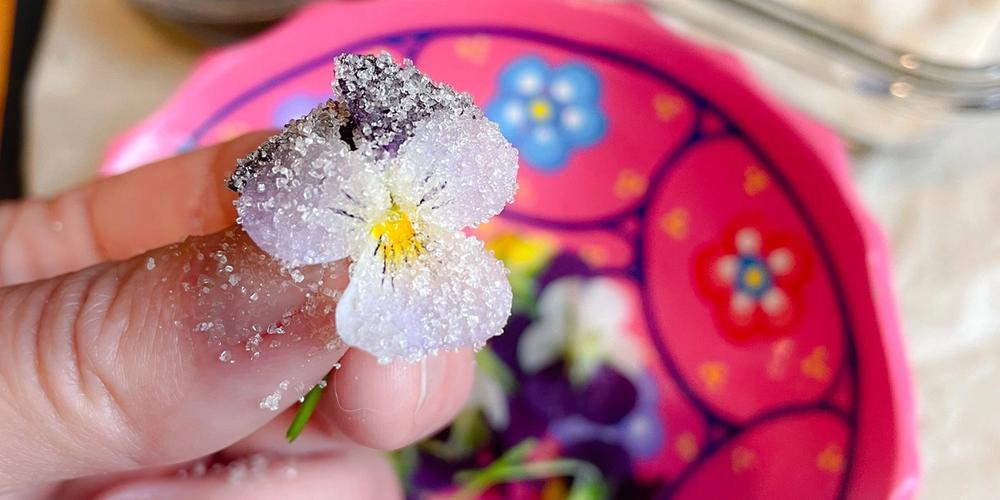
Sugared Violets
This suggestion to make candied violets is 100% decorative and just frivolous fun! The domesticated violets you are probably growing in your dome don’t have the same flavor profile as wild ones. They still make beautiful edible ornaments to decorate cakes, cookies, and desserts.
Egg white or the juice from canned beans is painted onto the violets, sprinkled with sugar, and allowed to dry. I didn’t have canned garbanzos handy, so I used black bean aquafava. I was pleasantly surprised that the dark purple color didn’t obstruct the natural colors of the violets. A thin coating went on pretty clear.

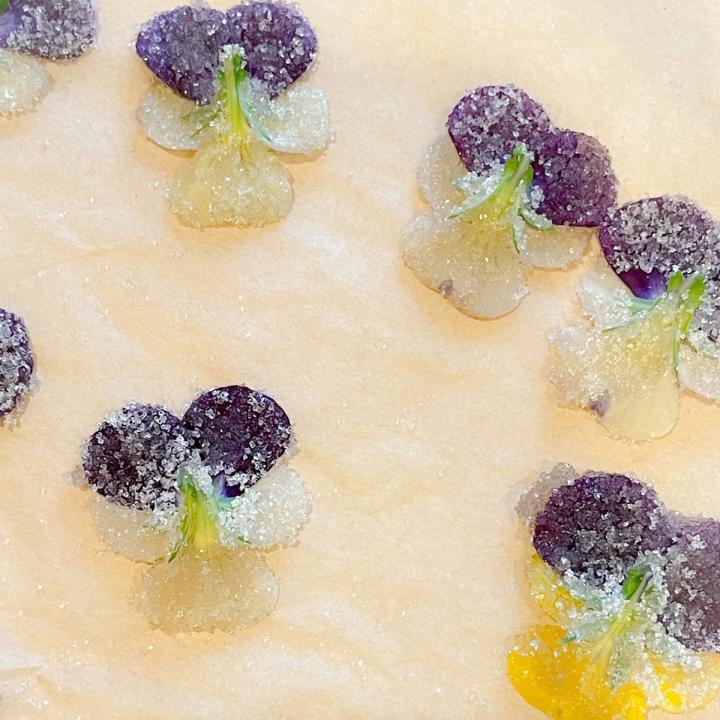
My wire racks couldn’t hold the small violets, so I placed them face down on wax paper to dry.
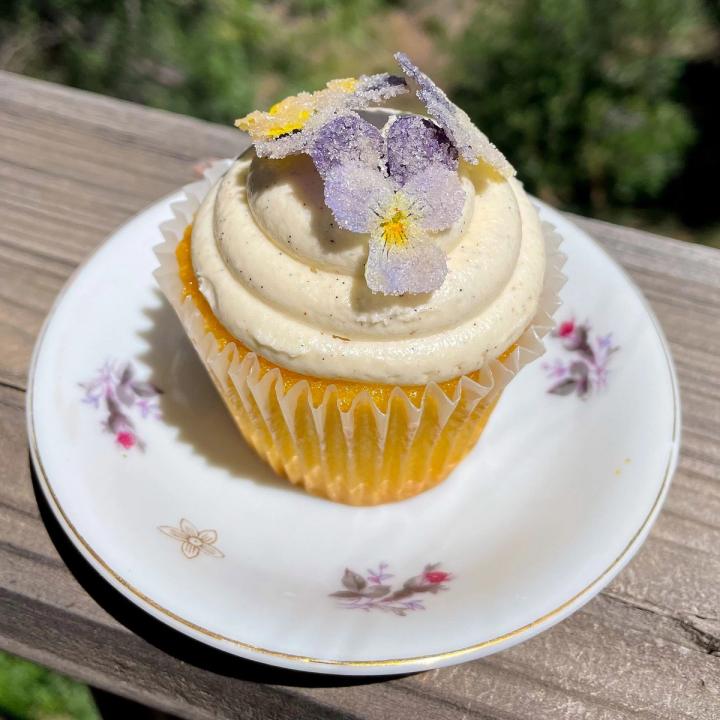
The other challenges I faced were painting on the aquafava and drying. Because the violet petals are so supple it’s difficult to hold them and paint on the bean juice. I found it easiest to paint the aquafava on a small spot of wax paper, lay the violet face down in the puddle, and paint the back.

Spruce Sugar
Spruce sugar falls into the category of wild foraging outside of your Growing Dome and is more about infusing the sugar with the citrus and piney notes from the spruce tips, rather than trying to preserve the tips. I threw it in here because the magnificent, blue spruce is the Colorado state tree, and it’s the time of year in the high country for harvesting spruce tips as I was writing this article—mid-late June.
Spruce Sugar would make a nice crunchy topping on a lemon scone or add to a herby spice rub.
Preserving Food in Oil

You may remember everything you have bought at the store packed in oil such as sardines, mushrooms, sun-dried tomatoes, artichokes, or herb-infused oils. There are several reasons these commercial preparations are safe to eat. They are likely to have been pasteurized or had the addition of vinegar or other acidic preservatives. In the home kitchen, when storing low-acid foods in oil, the same care should be taken, or it will only last a few days in the refrigerator before it should be frozen for longer storage.

Garlic Confit
Our plant of the month is garlic, which stores for an extended amount of time (on average 4–6 months) with minimal effort. The key is keeping it cool and dry. You will find mixed advice about whether the fridge is too cold, and that may depend on your climate and available storage space. A root cellar may be too humid and cold for long-term storage.
Curing, or allowing the garlic bulbs to dry before storing is important. What can be agreed upon is to keep your garlic bulbs out of the sun. And don’t store them in plastic bags; always use paper, cloth, or mesh. If you haven’t removed the leaves from your softneck garlic, the bulbs can be braided together and hung directly. Or lay them flat on cardboard trays.

Let’s take your garlic harvest beyond the usual curing and storing with a recipe for garlic confit. In short, this method is slow-roasting garlic in oil and can be stored safely in the refrigerator for a few weeks. Because of the low acidity level of garlic, it is not recommended to store garlic confit at room temperature, or for longer without canning, to prevent the risk of botulism.
I also like to roast whole heads of garlic in the oven and then freeze the cloves individually for use in recipes.

Pesto & Chimichurri
Pesto is another obvious food that relies heavily on oil to keep the basil from discoloring. It can easily be frozen for longer-term use and doesn’t have to be limited to basil. Throw in other leafy, mild greens like spinach, chard, arugula, nasturtium leaves, or carrot tops. Speaking of carrot tops, I like to turn mine into a version of the Argentinian condiment, chimichurri. Both pesto and chimichurri will also be great for featuring your garlic harvest.
Preserving Food With Salt
Curing by salting is typically thought of when preserving meats and fish, but it also works with fruits or veggies. Salt preserves food by drawing moisture out through osmosis and reducing the water available for microorganisms. Depending on the food and method, salting may be used with drying, curing, fermenting, or refrigeration.
Cured Lemons
Your first thought might not turn to salting fruits. This can be used for other citrus like oranges, grapefruit, limes, and kumquats. For my needs, I preserve one or a part of a lemon and it lasts a long while, several months in the fridge. I like to flavor mine with sumac berries, bay leaves, or peppercorns.

It has probably been ten years since I last preserved a lemon. Back then, I had a Meyer lemon on hand and seemed to remember just packing it in salt and putting it straight in the fridge. This time, the recipes I reviewed talked about submerging it in lemon juice and placing it on the counter for a few days. Sounds like lacto-fermentation to me. So that’s what I’ve done. Time will tell how it turns out. We’ll revisit preserved lemons in our article on pickling and fermentation, where you can also see how this batch turned out.
Preserved lemons are often used in North African and Middle Eastern recipes. I use them anywhere else I might use salt and lemon: in salad dressings, marinades, or even salsa. Small bits of the rinsed rind could add interesting pops of flavor to a sweet dish like blueberry muffins. The salt and lemon combo can be powerful. Always taste and adjust the seasoning in your recipes to accommodate the citrusy brine.
Those are just a few ways that salting, sugaring, and packing in oil can extend the shelf-life of some of the herbs, vegetables, and fruits you may be growing in your garden. When we talk more about pickling or canning jams, you’ll recognize the incorporation of these techniques. Next, we’ll look at freezing the green chile harvest.

Want to Preserve Something Else?
Sugar, salt, and oil are a few short-term ways to preserve the harvest. For longer shelf-life and alternative methods like canning and freezing, check out our Preserving the Harvest series.


Seasonal Growing Tips & Greenhouse Advice
Monthly stories from our greenhouses, Growing Dome spotlights, and other gardening content


Share This

Having lived in Pagosa since 2001, I’m very familiar with Growing Spaces and have been interested in their geodesic dome design since we moved here. I got my start in gardening in the challenging conditions that Pagosa has to offer. In a previous role with the Southwest Land Alliance, I was able to contribute my graphic design services to the Geothermal Greenhouse Project, which features these unique domes. When I’m not working, I’m camping and exploring with my husband and dog, or I may be found tinkering with new creative projects like knitting or picking the mandolin. I’ve worn a lot of hats over the years and am excited now, in the spring of 2024, to be joining the marketing team and supporting the Growing Spaces community.
View full bioDownloads
Featured Categories
Seasonal Growing Tips & Greenhouse Advice
Monthly stories from our greenhouses, Growing Dome spotlights, and other gardening content
Featured Stories


Featured Products


Sign up for The Happy Grower Newsletter
Once a month: stories from our gardens, Growing Dome spotlights, and what's in season in Pagosa Springs.