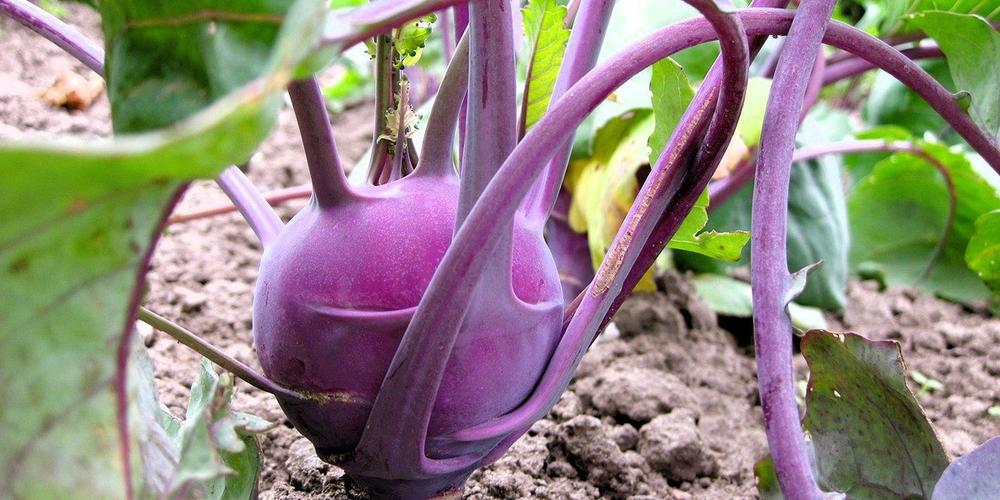
Kohlrabi Cultivation: Your Guide to Growing This Above Ground Turnip

Kohlrabi is a fast growing plant that prefers cooler temperatures. It tastes like a cross between a turnip and a broccoli stem, but it is crisp like an apple. Give kohlrabi a try in your dome!
- Family: Brassicaceae
- Common Name: Kohlrabi, German turnip, turnip cabbage
- Type: Vegetable
- Light: Full sun
- Soil pH: Neutral to slightly alkaline, Slightly acidic to neutral
- Soil: Well-draining
- Zone: 3-10 (USDA)
Growing Kohlrabi
Kohlrabi is easy to grow, especially in a dome greenhouse in fall. Provide your kohlrabi with sunlight, water and well-draining soil and it will thrive.
Free Download
Best Location in a Dome
Consider the requirements listed above. Kohlrabi prefers cooler temperatures which makes it an excellent fall plant. The ideal temperature for kohlrabi is between 40°F to 75°F (4-24°C).
Planting Kohlrabi
Like many members of the Brassica family, where you plant kohlrabi is important. Kohlrabi needs at least 6 hours of sun daily. Choose a location that has not been home to other brassicas in the past two-three years. Crop rotation is a wise choice for Brassicas. Kohlrabi needs soil that is rich, slightly acidic and drains well.

Sow kohlrabi seeds ¼ to ½ inch deep, spacing them 2 inches apart. Between 4-7 days the seedlings should emerge. Thin them to 5-8 inches apart.
Caring for Kohlrabi
Light: Full sun. This means a minimum of 6 hours of sunlight each day.
Temperature: 40°F to 75°F (4-24°C)
Soil: Neutral to slightly alkaline or slightly acidic to neutral. For kohlrabi the best pH level is between 6.0-8.0
Water: Kohlrabi needs one inch of water per week. That means 0.62 gallons per square foot of your garden area.
Best Companion Plants For Kohlrabi
These plants are just a few that make great companions for kohlrabi. Beets, bush beans, celery, cucumbers, lettuce, onions and potatoes.

Kohlrabi and lettuce companions
Bush beans and peas help by fixing nitrogen in the soil.
Beets happily coexist with kohlrabi as they don’t require as much calcium as kohlrabi and other brassicas need.
Celery and kohlrabi are good companions as neither one of them spreads. There is an old wives tale that celery improves the flavor of kohlrabi. Whether or not that’s true is unclear. You can experiment!
Chamomile can help deter pests and fight off fungal diseases. Just be aware it is very prolific and will drop seeds everywhere.
Chives are a pest deterrent, beautiful and delicious!
Lettuce is a good companion plant for kohlrabi and a necessity to many gardeners.
Worst Companions
Plants to avoid are other members of the cabbage family as it can become a buffet for pests. Other plants to avoid are corn, peppers, strawberries and tomatoes.
Managing Pests and Diseases
The pests that enjoy kohlrabi are aphids, cabbage pests, cutworms, flea beetles and thrips.
Aphids can leave a sticky residue, sooty black mold and cause misshapen leaves. Knock aphids off plants with a spray of water or by using an insecticidal soap.

Flea beetles leave many tiny holes in the leaves of your plants. Dust the leaves with talcum powder or use white sticky traps. Planting strong scented plants such as sage can help deter flea beetles.
Thrips are small, but keeping an eye on your plants will help identify the damage and the pest. Damaged leaves may have white patches or silver streaks along with brown tips. Other signs are blistering or bronzing on the leaves as well as curling or scarring. Using yellow or blue sticky traps will help deter thrips.
Don’t forget to include beneficial insects to help keep your plants safe from pests!
Be sure to monitor your other plants and sterilize your garden tools after each use with a bleach solution.
Diseases
Downy mildew symptoms first appear as small, water soaked spots. Later symptoms are yellow spots, withered leaves, fungal growth on the undersides of leaf lesions and dying leaves. Grow plants up a trellis and trim lower leaves from plants.
Powdery mildew is a fungal disease that appears as a white blotchy pattern on the leaves. It is actually a layer of mildew made of spores. These spores can be carried to other plants by wind. Baking soda spray and milk spray are effective home remedies to treat plants for powdery mildew.
For both of these diseases it is important to disinfect garden tools to help prevent spreading the disease. Consider purchasing seeds or plants that are resistant to these diseases.
Harvesting Kohlrabi
Kohlrabi harvesting depends on what you are harvesting. Harvest the stem and leaves first as needed. The stem is the most tender when it reaches about an inch in diameter. Use clippers or shears to reduce the chance of damaging the bulb. Leave the inner and uppermost leaves until the bulb is ready to be harvested.
Kohlrabi bulbs can be harvested once they have reached two to four inches. Waiting too long to harvest kohlrabi means the bulb will become woody. Remove the whole vegetable and cut off the roots. Clip the stems flush with the bulb.
The History of Kohlrabi

This “new” vegetable was first mentioned in 1554. Botanist Mattioli wrote that it had come lately to Italy. By the end of the 16th century it was being grown in Austria, England, Germany, Spain and in the eastern Mediterranean.
How it arrived in America is a mystery. Bernard McMahon, a horticulturist from Ireland who settled in Philadelphia. He was one of the stewards of the Lewis and Clark expedition plants. He wrote The American Gardener’s Calendar: Adapted to the Climates and Seasons of the United States. Mr. McMahon mentioned kohlrabi in 1806.
The taste of kohlrabi is milder and sweeter than other brassicas and the flavor improves in cooler temperatures.
Kohlrabi Uses
Kohlrabi is unique looking, but don’t be afraid to try it! The leaves are edible and can be used in a variety of recipes. The outer skin is tough, but after it is peeled, you can saute, grate, steam or grill the inner bulb. It is great in salads and slaw; use it the same as kale or collard greens. One popular method in Cyprus is to sprinkle it with slices of salt and lemon as an appetizer.

Kohlrabi Trivia
- Kohlrabi is a German word meaning “cabbage turnip”. Kohl means cabbage and Rübe means turnip.
- Growing kohlrabi is relatively new. It was first documented around 500 years ago. Farmers in the United States began growing it in 1806.
- To store kohlrabi in the fridge, wrap it in a damp towel after harvesting. This will help to keep it from becoming inedible and woody.
Health Benefits
What about the health benefits of kohlrabi? It is a low glycemic food, which helps with metabolism and aids in weight loss. It is high in fiber, which helps prevent obesity.
The calcium and magnesium in kohlrabi help strengthen bone density. Kohlrabi is rich in vitamin C, is beneficial in helping the body fight infections, reducing inflammation, improving immunity and lowering cholesterol.
Some of the other benefits are carotenoids along with other antioxidants which protect from free radical damage. Kohlrabi has anti-cancer properties, supports gastrointestinal health and is good for your heart.
If you haven’t grown kohlrabi in your Growing Dome greenhouse, consider it for next season or try it now. Happy gardening!

Seasonal Growing Tips & Greenhouse Advice
Monthly stories from our greenhouses, Growing Dome spotlights, and other gardening content


Share This

I joined Growing Spaces in 2021 as a gardener and now work with the Marketing and Social Media department. Formerly I was a kindergarten teacher and then worked as a Gardener and Volunteer Coordinator at Maui Nui Botanical Gardens in Hawai'i. Since moving to Colorado I have worked in the veterinary field and have been involved in therapy dog work visiting hospitals, schools and libraries with a national therapy group. My previous dog and I also worked as a crisis response team helping those affected by crises or disasters and were deployed through Hope Animal-Assisted Crisis Response (Hope AACR). Muppet and Maple are my current therapy dogs and we visit the library and hospital here in Pagosa Springs. Muppet is also a crisis response canine with Hope AACR. Outside of working and volunteering, I love growing native plants, flowers, berries, herbs and veggies at home, photography, hiking, horseback with my husband and hanging out with our dogs.
View full bioDownloads
Featured Categories
Seasonal Growing Tips & Greenhouse Advice
Monthly stories from our greenhouses, Growing Dome spotlights, and other gardening content
Featured Stories


Growing Dome Photo Contest 2026


How the Growzebo™ Came to Life

Featured Products


Sign up for The Happy Grower Newsletter
Once a month: stories from our gardens, Growing Dome spotlights, and what's in season in Pagosa Springs.