How to Get Rid of Fungus Gnats in Your Greenhouse

Fungus gnats are more than a mere nuisance in greenhouses, they are persistent pests that can compromise your entire crop, particularly young seedlings. Their larvae feed on tender plant roots, often causing irreversible root damage and leading to disease outbreaks. Whether you’re managing a small backyard greenhouse or a commercial production space, knowing how to prevent and eliminate fungus gnats is essential. This article will guide you through detailed strategies, including biological controls, sanitation, and Integrated Pest Management (IPM) to help you maintain a healthy, pest-free environment.
What Are Fungus Gnats and Why Are They Harmful?

A Fungus Gnat Larva
Fungus gnats are small, black flying insects resembling miniature mosquitoes. Adults typically measure about 1/8 inch long, with long legs and transparent wings. While the adults don’t feed on plants, their primary purpose is to reproduce. Each female can lay up to 200 eggs in damp growing media. These eggs hatch into translucent larvae with shiny black heads, which feed on organic matter and, more destructively, on root hairs and plant tissues.
When larvae feed on seedling roots, they reduce water and nutrient uptake, leaving young plants stunted or vulnerable to diseases. If you notice stunted growth, wilting despite adequate watering, or yellowing lower leaves, fungus gnat larvae could be to blame.
How Do Fungus Gnats Get Into Your Greenhouse?
Understanding how fungus gnats are introduced is key to preventing future infestations. These pests are adept hitchhikers and often enter unnoticed:
1. Contaminated Potting Media or Compost
Bags of commercial soil that have been improperly stored, such as outdoors or in humid conditions, can already contain fungus gnat eggs or larvae. Even high-quality, organic mixes are not immune. Once you open a bag, be sure to use it promptly or reseal it in an airtight container. Some growers opt to pasteurize small batches of soil (by heating to 160°F for 30 minutes) to kill insect larvae and pathogens before use.
2. Nursery Plants with Infested Soil
Purchased seedlings, plants, or even trees from garden centers or wholesale nurseries often come with moist, fertile soil ideal for gnats. Inspect these plants carefully, and isolate them for 5–7 days before integrating them into your greenhouse. Our preferred method when obtaining plants or trees from an outside source is to bare-root them, or remove the soil, before planting in the greenhouse.
3. Reused Containers, Trays, or Tools
Fungus gnat larvae and eggs can survive on damp trays, used pots, or even stuck in organic residue on hand tools. Always clean and disinfect your equipment between cycles. A quick wipe with isopropyl alcohol and a rag will do the trick.
4. Excess Moisture and Poor Air Circulation
Gnats prefer high humidity and saturated soil. Standing water under benches, leaky irrigation fittings, or algae buildup in saucers provide ideal breeding conditions. To avoid this, address drainage issues, fix leaky emitters, and keep floor areas dry and clean.
Identifying a Fungus Gnat Infestation
The first sign is often visual: tiny black insects flying erratically around soil or light fixtures. But the real damage happens below the surface. To check for larvae, place a raw potato slice (peeled and cut thin) on moist soil overnight. Larvae will gather beneath it and can be seen the next day.
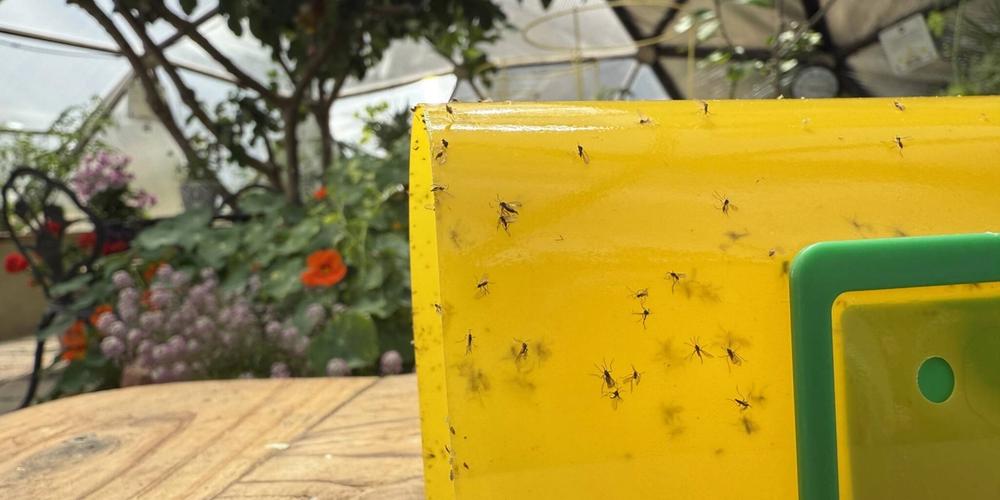
Another effective detection tool is the yellow sticky trap. Place it at soil level to monitor adult activity. If the trap fills up in 2–3 days, you’re facing a serious infestation and should act immediately.

Natural and Organic Control Methods for Fungus Gnats
Adjust Watering
Overwatering is the leading contributor to fungus gnat outbreaks. Their eggs and larvae thrive in continuously moist soil. By allowing the top 1-2 inches of growing media to dry out, you make the environment inhospitable to them. Use moisture meters or simply insert your finger into the soil to check before each watering.
Maintain Greenhouse Hygiene
Sanitation is essential. Clean up leaf litter, spilled media, algae, or dead plant tissue daily or weekly in your greenhouse. Disinfect surfaces between crop rotations and eliminate sources of stagnant water where possible.
Deploy Yellow Sticky Traps for Monitoring and Control
Yellow sticky traps are a core component of any Integrated Pest Management plan. Hang them vertically near high-risk zones or lay them flat on pots to intercept low-flying adults. Replace them weekly or when saturated. Try placing them on the struts of your Growing Dome or eyebolt hangers near the pond or other areas where airflow may be limited. These are the places they tend to congregate.
Apple Cider Vinegar Traps
Apple cider vinegar traps are excellent for catching adult gnats in small greenhouses or indoor gardens. Simply pour a few tablespoons of raw, unfiltered apple cider vinegar into a shallow bowl, add a dash of sugar, 1–2 drops of liquid dish soap, and stir gently. Place these traps near infested plants or seeding trays at soil level. The vinegar attracts gnats, and the soap breaks surface tension, causing them to drown.
These traps are best used in conjunction with other measures, such as soil drying or biological treatments, to prevent larvae from continuing the life cycle.
Introduce Beneficial Nematodes (Steinernema feltiae)
One of the most effective biological controls for fungus gnat larvae is the introduction of beneficial nematodes. Steinernema feltiae are microscopic roundworms that actively hunt and penetrate gnat larvae, releasing bacteria that kill the host within 24 to 48 hours.

Where to source nematodes:
You can purchase them online from Arbico Organics. They are typically shipped in a cold pack and should be applied immediately or stored in the refrigerator for no longer than a few weeks.
Application tips:
- Mix nematodes with water and apply with a watering can, backpack sprayer, or hose end sprayer.
- Apply during the early morning or late evening to avoid UV damage.
- Reapply every 2–3 weeks during high infestation periods or as part of a preventative IPM plan.
Use Bacillus thuringiensis israelensis (Bti) for Larval Control
Bti is a naturally occurring soil bacterium that produces a toxin lethal to fungus gnat larvae. Commercially available products like Mosquito Bits and Mosquito Dunks are popular among organic growers. Bti has no harmful effects on plants, pets, or beneficial insects and is approved for use in certified organic production systems.

How to use Bti:
- Mix 4 tablespoons per 1 gallon of water.
- Let the mixture sit for 30 minutes and skim off the floating granules.
- Stir the water then apply treated water directly to soil surface.
- Repeat every 5–7 days during active outbreaks.
Integrated Pest Management (IPM) for Fungus Gnats
Integrated Pest Management (IPM) is a proactive, multi-layered approach to pest control that minimizes chemical use while maximizing environmental and crop health. For fungus gnats, an IPM strategy combines the following:

Cultural controls: Manage moisture, use sterile soil, maintain sanitation, and inspect incoming materials.
Mechanical controls: Use yellow sticky traps and apple cider vinegar traps to intercept and monitor adult populations.
Biological controls: Apply nematodes and Bti to target larvae and prevent population growth.
IPM not only helps keep fungus gnat populations low, but also supports pollinator safety and reduces the risk of resistance associated with chemical pesticides.
Long-Term Prevention Strategies
Once fungus gnats are eliminated, prevention becomes your top priority:
- Quarantine all incoming plant material and inspect roots and soil for pests before integrating into your greenhouse.
- Keep potting soil dry and sealed until use, and discard any that smells sour or shows signs of moisture-related mold or algae.
- Monitor weekly using sticky traps to catch any potential infestation early.
Final Thoughts
Fungus gnats are persistent but entirely manageable with the right tools and techniques. From biological control with nematodes and Bti to better watering habits and sanitation, every action you take builds resilience in your greenhouse ecosystem. By combining science-backed natural controls with regular monitoring through an IPM framework, you’ll not only solve current infestations, you’ll future-proof your greenhouse against re-infestation.

Seasonal Growing Tips & Greenhouse Advice
Monthly stories from our greenhouses, Growing Dome spotlights, and other gardening content


Share This
Featured Products


I graduated from Fort Lewis College in 2018 with a BA in Environmental Studies. I began working for Growing Spaces in August of 2020 and have had the pleasure of working in many departments. I enjoy being a part of this amazing team that helps others achieve their dream gardens! In my spare time, I enjoy working in the 15’ Growing Dome that my husband and I share.
View full bioDownloads
Featured Categories
Seasonal Growing Tips & Greenhouse Advice
Monthly stories from our greenhouses, Growing Dome spotlights, and other gardening content
Featured Stories


Growing Dome Photo Contest 2026


How the Growzebo™ Came to Life

Sign up for The Happy Grower Newsletter
Once a month: stories from our gardens, Growing Dome spotlights, and what's in season in Pagosa Springs.