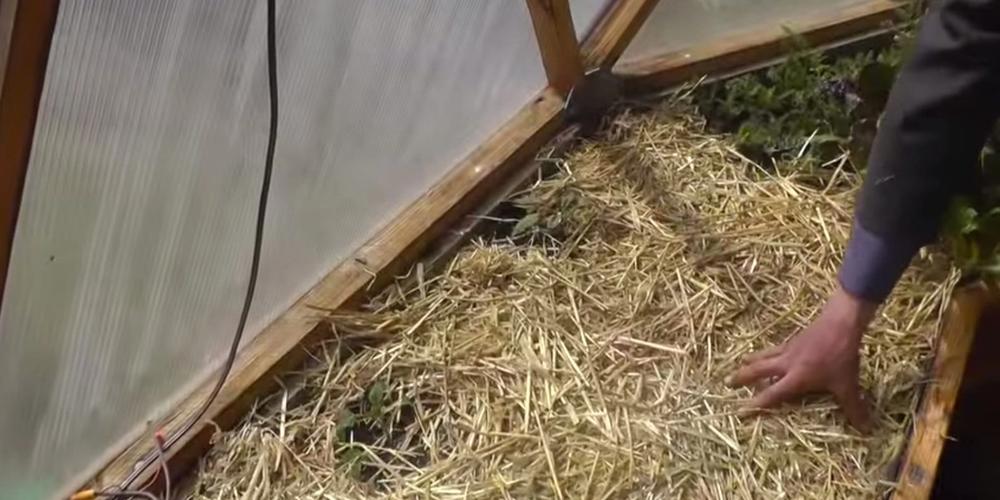
Greenhouse Mulching, Should You? Do You? If So Read This Article And Watch These Videos First!

You know you should be mulching, right? Or should you? This could be a contentious subject, so before you throw off your garden gloves, let me explain.

There are a lot of opinions out there about mulching.
- Should you mulch?
- Should you not mulch?
- What type of mulch should you use?
Well, we just did a little greenhouse mulching experiment here at Growing Spaces in our 15′ Dome and the results were, well, lets say, a little surprising! But first, let’s make sure we are all on the same page.
Mulch
Mulching is a common practice in most gardens. There are many reasons to mulch and many types of mulch to use. Deciding the right mulch will depend on what the mulch is intended to do in your garden. Mulching can be both beneficial and detrimental to the plants that you are growing.
So, Why Mulch?
- Mulch can provide a protective barrier around your plants and reduce water loss.
- A layer of mulch can act as an insulation barrier keeping soil warm in the winter and cool in the summer.
- A 1-2 inch layer of mulch around established plants discourages weed growth.
- Organic mulch can add nutrients to the soil.
- And aesthetically, mulch can give an organized and tidy look to gardens and landscaping.
Types of Mulch
Mulch can be categorized in two main categories; inorganic and organic.
Inorganic
Inorganic mulches can be made up of materials like stone, gravel, or plastic. Inorganic mulches are generally used for weed barriers and decorative purposes because they do not decompose quickly enough to improve soil quality. Furthermore, rocks that absorb and reflect heat can be detrimental to gardens during hot, dry weather.
Organic
Organic mulches can be made of a variety of materials.
Tree bark, wood chips, grass clippings, pine needles, shredded leaves, saw dust, straw, compost, and other organic materials can all be used to create a layer of material that could add nutrients to the soil through decomposition.
Pros and Cons of Mulch
Pros
- Conserves water by lowering evaporation in the soil.
- Prevents weeds by inhibiting the germinating weed seedling from reaching the sunlight, or by “drawing up” the weed so it is spindly and can be pulled.
- Can create an environment conducive to earth worms, other beneficials, and the breakdown of organic materials in humus providing nutrients to plants.
Cons
- Too much of or the wrong kind of mulch can suffocate, contaminate, or overheat the soil.
- Mulch can harbor slugs and pill bugs.
- Mulch can create an environment conducive to mold.
Now, I have a couple of videos that tell a story of what CAN happen when you mulch!
This first video is packed with great information on crop rotation starring Udgar, Kyle, and Lucy! I know you’ll enjoy what they are sharing, but pay close attention to what happens around 4:46 in regards to mulch. It really was a good idea, but the rest of the story is told in the second video.
Greenhouse Crop Rotation
That was good stuff right? Did you catch what happened with the mulch?

Gone for the weekend, nobody available to water, so let’s mulch to help hold in the moisture.
However, we started scratching our heads as time passed and NOTHING was growing where we mulched.
Check this video out.
Greenhouse Mulching
So lesson learned. Be careful what you mulch with. Make sure it is “clean” and free of harmful herbicides and pesticides. As we have our slice of humble pie, we hope you can learn from our mistakes. So, until next time, get out there and get your hands in the soil!

Seasonal Growing Tips & Greenhouse Advice
Monthly stories from our greenhouses, Growing Dome spotlights, and other gardening content


Share This

This byline marks posts written collectively by Growing Spaces staff where no single contributor is the primary author. Growing Spaces has designed and built geodesic Growing Dome greenhouses from Pagosa Springs, Colorado since 1989, with more than 2,000 installations across 50 states and 14 countries. Posts under this byline draw on shared expertise from the team: gardeners working the production trial domes, design and engineering staff, installation crews working on customer sites, and customer experience staff who walk owners through configuration and long-term operation. When a post belongs under one person's name, it carries that person's byline instead.
View full bioDownloads
Featured Categories
Seasonal Growing Tips & Greenhouse Advice
Monthly stories from our greenhouses, Growing Dome spotlights, and other gardening content
Featured Stories


How to Test and Amend Your Garden Soil


Hydrophobic Soil and How to Fix It
Featured Products


Sign up for The Happy Grower Newsletter
Once a month: stories from our gardens, Growing Dome spotlights, and what's in season in Pagosa Springs.