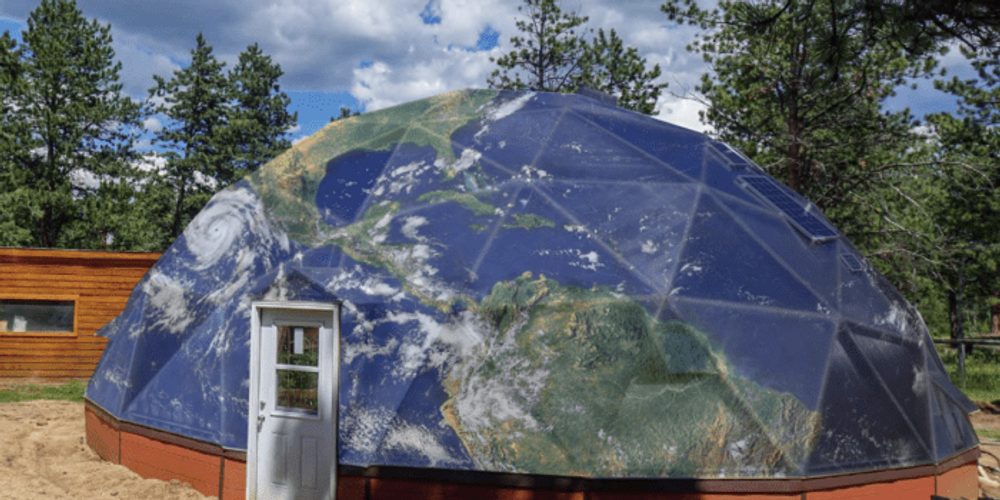
Earth Day 2020: Stay at Dome

Commit to reducing your Carbon Footprint by 10% with a Growing Dome Greenhouse

Earth Dome
As most of us are spending the 50th Anniversary of Earth Day in our homes, the Earth is getting a breather. Not as many cars on the road, planes in the air, or malls open using tons of electricity. Many of our largest cities have greatly improved air quality since restrictions were introduced due to the coronavirus.
On the other hand, it shows the population’s fragility when a virus can bring world economies to its knees. We can only assume that pandemics may happen more frequently, along with more mouths to feed and more extreme weather events across the planet caused by climate change.
In 2014 Wen Stephenson published a controversial article entitled “F%^k Earth Day: Let This Year Be The Last.” The premise of the article was that since the first Earth Day 50 years ago, we have treated Earth Day as a day of forgiveness versus a day of reckoning. Earth Day needs to be every day.

Over 20,000 people attended the first Earth Day observance in Philadelphia April 1970 AP Photo: Bill Ingraham
New Year’s Day may be a better mentor for Earth Day. We begin each year with a fresh perspective and commitments to improve the body, mind, and spirit. However, even those well-intentioned New Year’s resolutions are only kept for a few weeks or months.
Earth Day should not be about doing ONE thing on ONE day to make our planet a better place, it should be about making a permanent change to our daily routine to reduce our overall footprint on this Earth. Eliminate single-use plastic containers, eat less red meat, build a chicken-coop, ride your bike to work, plant trees, or turn your backyard into a garden.
Better yet, start a year-round greenhouse garden!

There are many reasons to invest in a Growing Dome Greenhouse. Benefits of dome greenhouse gardening include the joy of gardening year-round, saving money on expensive organic produce, the natural healing powers of getting your hands in the soil, and most importantly, the higher nutritional value of fresh fruits and vegetables off the vine.
In past blog posts, we have done our best to quantify these benefits. We know our customers are very practical people and dare I say, like to see the math.
So here is the math to calculate your carbon footprint:
-Weekly trip to the grocery store, 20 miles Round Trip = 1,040 miles/year = 0.5 ton CO2/year -Carbon cost to produce and ship ~ 540 daily calories of fruits and vegetables = 1.0 ton CO2/year

This shows you one could save 1.5 tons of CO2/year/person! If the average carbon footprint for a person in the United States is 16 tons, that is almost 10% savings.
Yes, Growing Spaces contributes to the global carbon footprint. While our shop has been 100% renewable since 2011, we still drive 2-ton diesel trucks and ship our domes and our crews all across the continent.
But our plans for growth mirror our plans to reduce our footprint. Sourcing and fabricating lumber and polycarbonate locally to avoid shipping. Updating our instructions and videos to make it easier for do-it-yourselfers or hire local contractors to avoid travel. We have already started to implement sourcing and installation internationally through our global greenhouse partnerships.

Agriculture by itself contributes to 10% of US Greenhouse Gas emissions. Food waste is also a major contributor, with 30 percent of food wasted globally. Local organic food production eliminates many of these variables. No processing, less transportation, minimal packaging, organic systems and only buying what you need to reduce waste.
Americans are also realizing the benefits of growing their own food during this critical time. Seed companies are seeing unprecedented levels of demand. Hydroponic and Aquaponics kits are becoming more mainstream, and add both beauty and efficiency to your lifestyle.
Growing Domes are also in high demand, and can bring the solution to your backyard on a larger scale. There is no greater reward than picking your produce fresh from your own garden, all year long.
We encourage you to make this Earth Day more like it should be: decrease your carbon footprint by installing a dome greenhouse to make a real change to be more sustainable for both your health and the planet.


Seasonal Growing Tips & Greenhouse Advice
Monthly stories from our greenhouses, Growing Dome spotlights, and other gardening content


Share This

Lem and his wife Liz owned Growing Spaces from April 2018 to 2025, having acquired the company from founders Udgar and Puja Parsons. They were drawn to it as a Colorado-based manufacturer making environmentally thoughtful products and to the chance to promote sustainable, healthy lifestyles through the Growing Dome. Lem is a mechanical engineer (CU Boulder) and spent his career in Colorado manufacturing before taking on Growing Spaces, with a focus on efficiency, product quality, and customer experience. Liz is a VP of Operations for a healthcare payment integrity company. They live in Golden, Colorado with their three sons.
View full bioDownloads
Featured Categories
Seasonal Growing Tips & Greenhouse Advice
Monthly stories from our greenhouses, Growing Dome spotlights, and other gardening content
Featured Stories


Happy National Pollinator Week!


Featured Products


Sign up for The Happy Grower Newsletter
Once a month: stories from our gardens, Growing Dome spotlights, and what's in season in Pagosa Springs.